All publications (609)

Tracey McLennan joins me for a conversation on how her software background has informed her approach to dog training and led to her framework for smarter, faster, training progress.

2567
0

Precision heeling and contact heeling may seem similar in some ways - but they're also very different. Join me for a conversation with Denise Fenzi on when she uses which one and how (and why) she approaches training both!

4210
0

Looking to improve your relationship with your dog and improve your teamwork? In this episode, Crystal breaks down the factors that go into fostering that relationship in a healthy way.

3202
0

Have a dog who likes frisbees? Join us for a conversation about UpDog — including What's UpDog and how you can compete!

3016
0

Life can be really hard, and today's political climate (and fallout from) is a lot. And let's be real—it's not getting better anytime soon.

This means we have two choices: let stress run the show or take control of how we manage ourselves.

4283
0

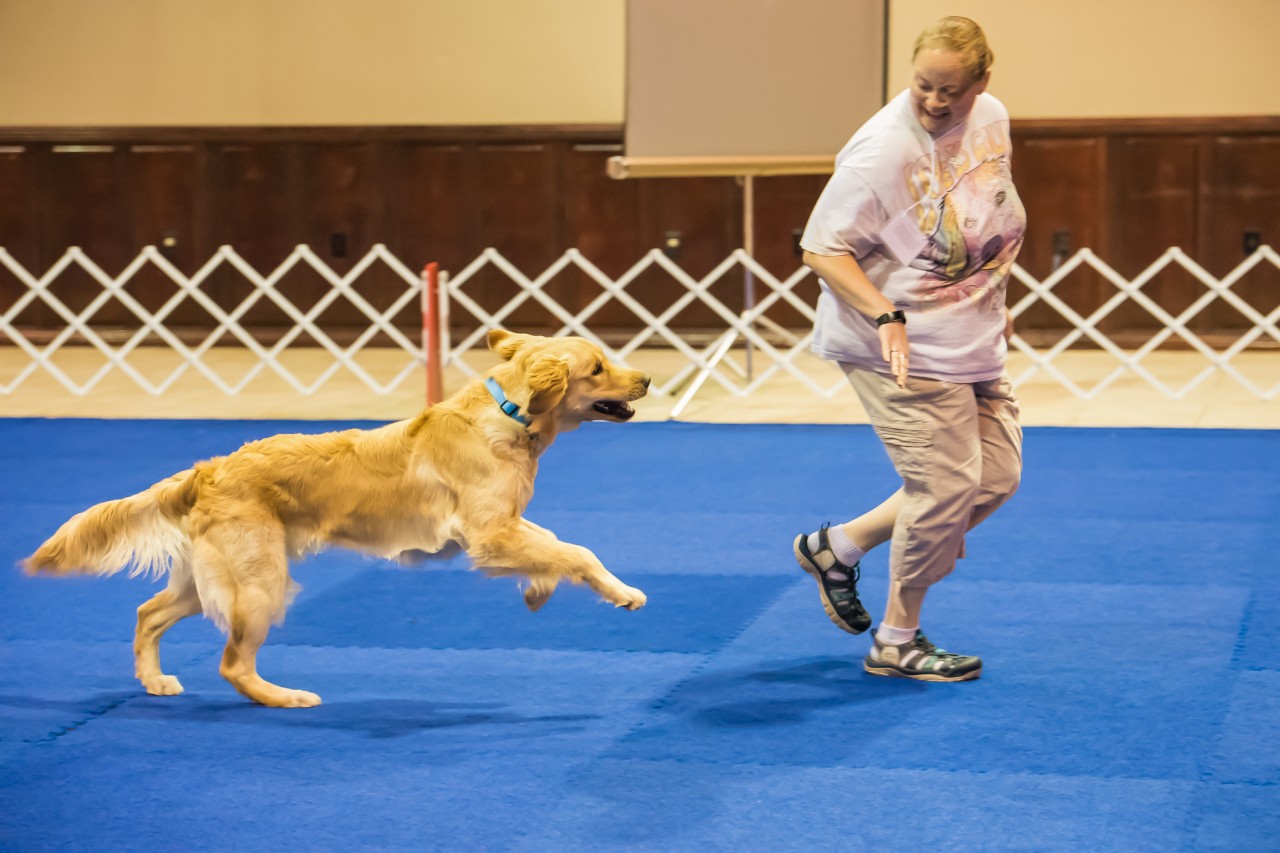
Do you find your dog tends to fall flat as you continue to raise criteria in training? Or maybe you have a dog that is SO enthusiastic that precision feels like an impossible dream? Join us for a conversation on balancing motivation and precision in your sports training.
4192
0

Why Reward Placement Matters: When a dog receives reinforcement, they're likely to repeat not only the behavior they were doing, but also the position they were in and where they were looking when the reward arrived. In heeling, this means that if you feed your dog out in front or with their head turned, you're unintentionally reinforcing forging or crookedness. On the other hand, if you carefully place rewards right at your left pant seam, you help reinforce a dog that is in heel position, focused upward and back, engaged and aligned. Reward placement is shaping—without even asking for more effort.

4361
0

Sugar cravings are something almost everyone experiences, but have you ever wondered why they happen and how to control them without feeling deprived? In this post, we'll explore the science behind sugar cravings, how to recognize patterns, and build better habits.

Sugar Cravings Don't Have to Control Your Day

Sugar cravings aren't just about willpower—they're rooted in biology, habits, and emotions. Understanding why they happen is the first step to breaking the cycle.

Sugar cravings are something almost everyone experiences, but have you ever wondered why they happen and how to control them without feeling deprived? In this post, we'll explore the science behind sugar cravings, how to recognize patterns, and build better habits.

Identifying WHY Your Sugar Cravings Are Happening

Are you tired?

Nothing will wreak havoc on your goals or motivation like poor sleep. If you're not getting enough sleep, you can be sure your body will find ways to plug energy gaps in the days and often with quick boosts of energy.

Are You Balancing Your Blood Sugar?

Eating too many refined carbs or sugary foods causes rapid spikes in blood sugar, giving you a quick burst of energy. However, these spikes are followed by sharp crashes, leaving you feeling tired, hungry, and craving more sugar to bring levels back up. This cycle can make sugar cravings feel relentless.

What Gut Bacteria Are You Feeding?

Your gut bacteria play a major role in cravings. The microbes in your digestive system adapt to what you eat most often. If you frequently consume sugar, your gut bacteria will start to demand more, reinforcing cravings and making it harder to cut back.

Does Sugar Make You Feel Good (… for a minute)?

Sugar activates the brain's reward system by triggering the release of dopamine, the "feel-good" chemical. This creates a sense of pleasure and reinforces the habit of eating sugar. Over time, your brain starts to crave that dopamine hit, making sugar feel almost addictive.

Is This Simply A Habit or Conditioning

Cravings aren't always physical—sometimes they're just habit. If you always eat sweets after dinner or reach for sugar when stressed, your brain begins to associate those moments with needing something sweet. This conditioning makes cravings feel automatic, even if you're not actually hungry.

Are You Fueling Your Body?

A diet lacking in protein, fiber, and healthy fats can leave you feeling unsatisfied, leading to sugar cravings as your body searches for quick energy. Low magnesium levels can also contribute to cravings, especially for chocolate. Balancing your meals with more nutrients can help reduce these cravings naturally.

Are You Stressed, or Experiencing Hormone Fluctuations?

When you're stressed, your body releases cortisol, a hormone that increases cravings for fast-digesting, high-energy foods like sugar. Emotional eating can further reinforce sugar as a coping mechanism, making it harder to break the cycle. Finding healthier stress-management techniques can help reduce these cravings over time.

Are They Biological vs. Habitual?

Not all cravings are the same! Some come from physical needs (biological) while others are triggered by habits or emotions.

Biological Cravings (Driven by the Body's Needs)

  1. Blood Sugar Drop – Skipping meals or eating mostly refined carbs leads to a sugar crash, making you crave sweets for quick energy.
    • Example: You feel shaky in the afternoon and suddenly want candy or soda.
  2. Low Energy/Fatigue – Poor sleep, over-exercising, or undereating can cause low energy, making sugar cravings stronger.
    • Example: After a bad night's sleep, you crave a sugary coffee drink or pastries.
  3. Nutrient Deficiency – A lack of protein, fiber, or healthy fats can leave you unsatisfied, leading to cravings.
    • Example: You eat a carb-heavy meal (like pasta with no protein) and find yourself craving cookies an hour later.
  4. Hormonal Shifts – Estrogen, progesterone, and cortisol impact cravings, especially around menstruation or stress.
    • Example: You crave chocolate right before your period due to hormonal fluctuations.

Habitual Cravings (Triggered by Routine, Emotions, or Environment)

  1. Dessert After Every Meal – If you always eat sweets after meals, your brain expects it, even if you're full.
    • Example: You feel like you need chocolate after lunch, even though you aren't hungry.
  2. Emotional Comfort Eating – Sugar is often used as a coping mechanism for stress, sadness, or boredom.
    • Example: After a rough workday, you automatically grab ice cream.
  3. Time-of-Day Triggers – Your body adapts to routines, making cravings habit-based rather than hunger-driven.
    • Example: You're not hungry, but at 3 PM, you crave a sugary snack because it's "afternoon snack time."
  4. Social & Environmental Cues – Seeing or smelling sweets can trigger cravings even if you weren't thinking about sugar before.
    • Example: Walking past a bakery suddenly makes you want a pastry.

Find Your Patterns & Proceed Accordingly

By tracking your cravings, you can identify patterns and make small changes. Ask yourself:

  • What time of day do I crave sugar?
  • What am I craving?
  • What am I feeling? (Hungry, stressed, bored, tired?)
  • What did I eat earlier?

Once you notice patterns, you can adjust—like adding more protein at lunch to prevent that afternoon sugar crash.

Balancing Blood Sugar:

  • Eat more protein, fiber, and healthy fats to prevent blood sugar dips.
  • Avoid extreme restriction—cutting out sugar entirely can backfire and make cravings stronger.

Replacing the Habit:

  • Find satisfying alternatives (like fruit with protein) instead of processed sugar.
  • Use sensory cues to manage cravings:
    • Warm drinks (like cinnamon-spiced tea) can mimic indulgence.
    • Crunchy foods (like raw carrots or nuts) satisfy the need for texture.
    • Sweet scents (like vanilla or cinnamon) can trick your brain into feeling satisfied.

Mindful Indulgence:

  • Enjoy sweets without guilt—but portion wisely.
  • Choose better options, like dark chocolate instead of processed candy.

Key Takeaways & Next Steps

Sugar cravings are normal, but they can be managed.
Understanding patterns (biological vs. habitual) helps reduce cravings.
Balancing blood sugar & making smart swaps can help curb sugar dependency.

Your Next Steps

Hit the low-lying fruit:

  • get enough, high quality, sleep
  • drink 8 cups (or more) of water per day
  • eat 25 grams of protein and a source of good fats at each meal

Track your cravings for a few days to spot patterns.

Experiment with protein-rich meals to stabilize blood sugar.

35
0

Exercise does more than just strengthen your body—it also triggers the release of what scientists call "hope molecules." Regular movement, especially strength training, jogging, or vigorous walking, helps flood your system with mood-boosting compounds. In a world where stress and uncertainty can feel overwhelming, movement is one of the simplest ways to boost hope and resilience.

13
0

If you've found yourself thinking, "I'm gonna do that differently with the next puppy," or "Next time I'll do this perfectly," you're not alone. Join me, Kim, and Erin for a discussion on what they prioritize with future sports dogs, why there's always something they'd do differently "next time," and how they're tackling things right now.

3294
0

avatar
Melissa Admin
May 30, 2025

Enter your text here ...

0
0

Agility handling is a game of precision, speed, and split-second decision-making. Yet, many handlers find themselves struggling with late cues, unstable turns, or inconsistent movement—issues they often blame on technique alone. While skill and timing are crucial, there's another often-overlooked factor that could be holding you back: core strength.

A weak core can lead to inefficient movement, slower reaction times, and even increased injury risk. By improving your core strength—specifically in rotational, anti-rotational, and anti-flexion movements—you can dramatically enhance your handling ability.

3088
0

Jumps make up a significant percent of every agility course - yet so often they receive only a small percentage of our training time. If you've ever wondered what jump grids are, how to teach your dog collection, or whether cavalettis might improve your dogs performance... give this episode a listen!

3026
0

If you've ever walked into a Rally ring and felt like your dog wasn't quite with you, you're not alone. Connection is one of the most important—and often overlooked—skills in Rally. Without it, everything feels harder. With it, everything flows.

In Rally, connection isn't just nice to have—it's essential. It affects the quality of your heeling, the accuracy of your signs, and your overall performance as a team. So how do we build and maintain that connection throughout an entire course?

Let's take a closer look.

4724
0

We always say train the dog in front of you -- but in this podcast, Sarah shares the importance of considering the handler as well. Adjusting training so it's effective and easy for both members of the team may require some additional creativity... but it's more than worth it. Join us for a conversation on making training more accessible in this episode.

Transcription

Melissa Breau: This is Melissa Breau and you're listening to the Fenzi Dog Sports podcast, brought to you by the Fenzi Dog Sports Academy, an online school dedicated to providing high quality instruction for competitive dog sports using only the most current and progressive training methods. Today we'll be talking to Sarah Rodriguez about her journey in dog training and making training more accessible. Hi, Sarah. Welcome to the podcast.

Sarah Rodriguez: Hi. Thank you for having me.

Melissa Breau: Absolutely. To start us out, you want to just share a little bit about you and your dogs and maybe your parrot? Yeah, that sounds good. So I am a certified professional dog trainer from the Ethology Institute. I'm also a certified dog behavior consultant and Fear Free Certified professional. I've been training dogs professionally for over seven years with my business called Homeschooled Hound in Covina, where I work with clients one on one in person and also do virtual sessions around the world as well.

And I share my life with Danny. He is my little multipoo from the animal shelter that we adopted fairly recently. And so he's been so much fun and taught me a lot about training as well. And I share my life with Gracie, the brown headed Polycephalus parrot who also thinks she's a dog. So she barks just like a dog and, and she loves to do training as well.

And she loves to involve herself when I'm training my dog as well. So that's been a super fun experience. But I am really passionate about helping shelter dogs, getting them adopted, helping them to be trained, also helping people to understand their dogs and really build deeper relationships with them, working with fearful dogs, and then also building confidence in puppies and cooperative care as well. So those are some of the things that I'm passionate about.

Melissa Breau: Fantastic. How did you kind of originally end up in dog training?

Sarah Rodriguez: My journey really began with my very first childhood dog named Rosie. I was born with a neuromuscular disease called spinal muscular atrophy. Growing up with a disability, I never walked. I always used a wheelchair. Early on, I realized that I was different. I'd get the stares from people or the opposite end of the spectrum where people would like ignore me completely and just talk to my parents or those that I was with.

That was kind of something I've always experienced in my life. And so adopting our first dog, she just really opened up a whole new world to me and she really helped me to just really experience unconditional love and just no judgment of, like, she had no preconceived ideas of what I should be able to do or any of that. And it was really just an amazing experience. And I think that she really understood me.

And just, like, she, you know, had no idea of training. No one in my family did. And so she was so smart. She would figure out a way to play fetch with me, and she would, like, put the ball and in my lap, and she would, like, stand on her hind legs. She's very small dog. She was, like, 12 pounds, but she would put the ball in my lap, and, you know, I can maybe, like, throw it, like, 1, 2ft max because of my disability.

It was, like, a muscle weakness. And so she would, like, shove it into, like, between my knees to make sure it wouldn't fall. And then I would get it and, like, throw it just a little bit. And she would, like, time it perfectly so that she would, like, leap up and push it so it would fly across the room, and it would make me feel like, wow, like, I did that, you know, and then she'd, like, bring it back into it all again.

And it really made me excited that, like, I can play with her and interact with her in that way, but also that she would get very excited and happy about it. And, you know, just growing up, it really made me realize animals really understand so much about us, but we don't really understand much about them. And so I had started volunteering at the animal shelter from a very early age, and I realized how many people really do not understand their dogs or have a deep relationship with them.

And so that really became my mission, to really help people understand their dogs more, build deeper bonds, because then they wouldn't want to get rid of a family member because they would have a really close bond. And so that's really what got me into dog training.

Melissa Breau: Have you always kind of approached things from a positive training perspective? If not, you know, kind of, how did you get started there?

Sarah Rodriguez: Yeah, so I always have been a positive trainer, but I think even more so now is, like, my skillset has grown, and I've just gained more experience. And I think every animal that I work with has really taught me something. I think for all of us, every animal that comes into our life, we learn a new lesson and we learn new skills, and I think that has really helped me.

So over the years, I think I've really learned a lot more about offering animals choice in training and learning ways to really give dogs agency over elements of their own lives, because that's something that they really. We don't often give them. So that's definitely something that I have changed throughout the years. Just even as a positive trainer.

Melissa Breau: Can you share a little more kind of about your background with making training, excuse me, more accessible? Like, why is this such an important topic?

Sarah Rodriguez: Yeah, so I think first off, you know, having a progressive disability, it was kind of a necessity. So, you know, when I first started out, I had a little more like, upper arm strength than I do now, for example. And when I started out, you know, as a child, they had no treatments whatsoever. So now that has changed, and now they have treatments for my disability.

And so that has been huge. But for the longest time, it was a progressive disability. So if I couldn't do something one way that I was able to previously, then that really kind of helped me learn to just be creative and come up with new ways. And, you know, I think also just, you know, with my own necessity of working with dogs, but, you know, also like using a wheelchair and working with small dogs most of the time that were the ones in my own life anyway, you know, it's hard to reach them.

So I had to get really creative with just adapting the training to meet my needs. But then also, too, now as a professional working with clients with disabilities, I see how empowering it is, and I know firsthand how empowering it is to be able to teach your dog on your own something and then see that behavior really come to life. And I see that with clients as well, where maybe it's a family with even just a child who has a disability, and they think that they're not really going to get to be a part of the training.

And then to really open up that world for them to bond with their dog in that special way has also really helped me to realize the importance of making training accessible, but also to just adapting training to meet the needs of clients. As, again, as a professional, we see different people from all walks of life all the time, whether they're elderly and they got a puppy and they don't want to bend completely over to try and lure their dog, or somebody has an injury that's maybe new and different, and they've been training a certain way, but now they have to do it a different way.

There's people from all walks of life who need some creativity to be able to adapt the training to their needs. Then also too, just being in the shelter environment, working with dogs who are fearful and dogs who are reactive, dogs who may have trauma that we know nothing about, we don't know their triggers and the things that will make them feel afraid and like they're not safe. So really being able to adapt the training to meet their needs as well.

And then again, just like being a Certified Dog Behavior Consultant now, I get a lot of, like, those really unique, kind of weird cases where you just really got to think outside the box. And I think that making training accessible really helps you to really think outside the box and be creative, so that when you have unique cases, you can really be creative just not only to help the dog, but also the person as well and meet their needs.

Because there's going to be a ton of combinations of people and dogs, and you want to be able to help them in the best way possible. And what works for one person one dog might not work the same for everyone. So just really being able to broaden your skillset and be able to help everyone from all walks of life.

Melissa Breau: So, you know, kind of, to further that point or to talk a little more about that, you know, how do you think about adapting the training to the dog and handler team in front of you? What kind of adaptations do you feel it's kind of useful to have in your toolkit or to kind of think about?

Sarah Rodriguez: Yeah, so I think the first skill set that we really want to have is being observant, because I think as dog training professionals, we're often very good at watching the dog's body language, but oftentimes we don't think about the client as well. So if we see them struggling with a particular training method or even maybe it's not physical, maybe they're not struggling to bend over to lure the dog, but maybe they're struggling because they're getting frustrated because it's not working even for the animal as well.

Sometimes the animal gets frustrated because the way that they learn is just not fitting that particular technique that we're using. And so being observant really helps us to see what does this particular team need and how can we adapt the training so that everyone succeeds and really has a good time and a positive experience and also just making it easier to breaking it into smaller steps. I think that goes back to being observant.

If we're seeing that they're struggling or there's some frustration on either end, the handler or the dog, then we're able to break it up into smaller steps and make it easier. But I know even just in my own experience working with a variety of different clients, you see sometimes, like, okay, this technique is not working for whatever reason. Not that the technique is bad, there's probably a zillion other situations where it's going to be super useful, but they're just not getting it for either the person or the dog.

So let's switch gears. And I find that when we're able to do that, clients really feel empowered because it's like, okay, there's not just one way to do this. And so also having an open dialogue with clients to really find out if they're, if they are having a more challenging time doing something or, you know, what would this, does this technique work for you? Would you rather try it a different way and just kind of opening that conversation to really help them feel like, oh, there's other ways to do this?

Yeah, absolutely. Because I think a lot of times, even especially like in group settings, they're just like, well, everyone's doing it this way, so I need to do it this way. But it's not really working and it's frustrating. So just being able to have that open dialogue to really say, we've got a lot of ways to do this, let's tackle it together and really come up with ways.

And I think too, just some little adaptions sometimes could be raising the dog up higher so the person isn't bending over. Especially when, when you're working with a client who's elderly or I think really for anyone who's working, even just with a little puppy, they're like so low to the ground and nobody wants to be contorting themselves just to get the dog into a specific position. So just little things like that that we can do to really help clients and dogs to really understand what we're training, but in a very simple way and really tailor it to their specific needs.

Melissa Breau: So part of the reason that we're chit chatting is that you're doing a webinar for FDSA about a week after this airs. Do you want to share a little bit on kind of what you're covering during the webinar, maybe who might consider joining us?

Sarah Rodriguez: Yeah, absolutely. So I'm really excited to offer this webinar because I think it's going to help a wide range of people and really be something that everyone can, can gain from.

So what I'm going to be covering is luring in untraditional ways. So when you think of luring, you tend to think of like the treat to nose kind of luring. But I'm going to be talking about a lot of different ways in which we can utilize luring, and that's going to be in very untraditional ways and also adapting and using the environment and props to really get the behaviors that we're looking for utilizing food placement to facilitate behaviors, associative learning.

And it's really going to go beyond. So what I'm going to be talking about also really goes beyond capturing and shaping, which is the kind of traditional things that we think about. We're also going to go beyond. Beyond that to cover these topics as well. And I think it's really for a wide range of people. Like I said, it kind of. There's something for everyone, I think, for people who want to learn just to be more creative and have different ways of doing things.

Also just people with mobility challenges or injuries as well, professional trainers who work with a wide variety of clients. I want to be able to know just a bunch of different ways that you can teach behavior. And also people who have recently adopted a new dog. Maybe you don't really know their traumas, their triggers, and you just want to start by building confidence, having fun together. I think that this webinar is for you as well.

Melissa Breau: The webinar, I think it has in the title the term a hands off approach. Right. So since that's kind of the focus, how are you defining hands off for the purpose of the webinar?

Sarah Rodriguez: Yeah, so that's a really good question. And probably a lot of people are asking that. I think, you know, as professional, positive trainers, we are kind of hands off already in the sense that we're not like, pushing the dog's bottom down and like, forcing the dog into certain positions.

But I think there are a lot of ways that we are still very hands on in the sense of, like, again, luring, putting the treat right in the dog's nose and really trying to get these behaviors by being kind of right there and very involved. So this webinar is really more about combining a huge variety of different techniques and really getting creative in a way that gives the dog space away from us a little bit and really helps the dog to think for themselves and offer behaviors.

I know kind of thinking about the topic when I was putting together questions, it kind of immediately, like, the thing that I thought of was how empowering it would be for some dogs and how helpful, you know, maybe for building more independent behaviors and to teach the dog how to be a little more independent. If you're using kind of that hands off approach, even if it's maybe not necessary for the team.

Melissa Breau: Right. Can you talk to that a little bit? Are there other advantages here that, you know, people may not think of?

Sarah Rodriguez: Yeah, absolutely. I think there's a lot of different benefits, and one of them is even just reducing equipment that you might have to fade out later. So you might think about like, you know, foot targets and those kinds of things that you really try and get this, like precision heel work and those kinds of things that you're going to have to eventually fade out.

And it's just an extra thing to buy, an extra thing to include. And so we can reduce some of this extra equipment that we might not need. Also, distance work actually becomes a lot easier because a lot of times when we're working a little bit more hands on, the dog is very, very close to us, and it's very close proximity. So then once we try to, you know, they're getting their reinforcement right next to you.

So once we try to kind of to take that out a little bit, the dog has a really hard time working at a distance. So I do find that distance work becomes easier with this type of training. Also building confidence. So especially for newly adopted dogs, for dogs who may be a little more fearful, but really any dog can really benefit from building confidence. And the handlers too.

The handlers build confidence as well as they grow their skill set too. And then also just you really get to see the personality of the dog because you're really encouraging creativity, encouraging offering behaviors, and it's a lot of fun to really see their personality come to life. I know with my own dog, Danny, he is so funny, like the way he adds his own flair to different tricks and it's a lot of fun.

And he gets very excited when he knows that we're going to learn something new. And he loves to just like, add in his own little flair every time. Like, I have an image in my mind of what that end behavior is going to look like, and it's a lot of fun to see what he comes up with for it. And, and then also too just it really helps us as the handler, as the trainer to have a creative mindset in training.

So I think that also can sometimes reduce frustration a little bit, because if a technique isn't working and you think that's the only way to get the behavior in a positive way, sometimes it can be really frustrating. And so knowing that there's like tons of ways to do this in a fun way, in a positive way, that can also be really empowering as well. I can certainly see how if you're feeling stuck with something, sometimes just taking a completely different look at options, at creative solution, problem solving, you know, can be really beneficial.

Melissa Breau: Yes, exactly. Any final thoughts or key points that you kind of want to leave folks with?

Sarah Rodriguez: Yeah, I think mostly that would just be that really anything is possible. So if you're struggling with a behavior that you're trying to teach or you're physically having challenges with teachers teaching a behavior, there are just so many ways to get to your end goal and you can do that in a positive way.

So I just want to encourage anyone out there who's struggling and frustrated to just know that anything is possible and there are always solutions out there. And so training should be fun and it should allow us to really be creative and have a good time as we build deeper relationships with our dogs.

Melissa Berau: I love that. What a great note to end on. Thank you so much for coming on the podcast, Sarah.

Sarah Rodriguez: Thank you so much for having me.

Melissa Breau: Absolutely. And thanks to all of our listeners for tuning in. We'll be back next week. Don't miss it. If you haven't already, subscribe to our podcast in itunes or the podcast app of your choice to have our next episode automatically downloaded to your phone as soon as it becomes available, today's show is brought to you by the Fenzi Dog Sports Academy.

Special thanks to Denise Fenzi for supporting this podcast. Music provided royalty free by BenSound.com the track featured here is called Buddy Audio. Editing provided by Chris Lang. Thanks again for tuning in and happy training.

Credits

Today's show is brought to you by the Fenzi Dog Sports Academy. Special thanks to Denise Fenzi for supporting this podcast. Music provided royalty-free by BenSound.com; the track featured here is called "Buddy." Audio editing provided by Chris Lang.

Thanks again for tuning in -- and happy training!

2979
0

The more tools in your toolbox the more dogs you can help — in this episode Karen shares her experience using box feeding (aka the "dopamine box") to build confidence, desensitize to sounds, develop duration as a concept, for scent work, tracking, and to develop working under pressure.

4629
0

With the upcoming one day conference on matters of motivation, Denise, Crystal, and Jane joined me to share their takes on what motivation really is and why it matters.

4320
0

You've taught your dog the exercises—but do you know how to show them in the ring?

Join Petra Ford for a deep dive into what actually happens during an AKC obedience trial, from Novice through Utility. She goes beyond the rulebook and training videos to explore the flow of a performance—what the judge says, how you respond, when you can talk to your dog, what you can do during transitions, knowing where to go, how to use subtle cues and handling strategies to help your dog succeed, and more. Originally aired as a facebook Live in the FDSA Student Alumni Group, we've downloaded the recording and are re-sharing here for free.

If your dog knows the exercises but you're unsure what to do when you walk into the ring—this recording is for you!

2880
0

There are certain topics in the dog training world that feel almost taboo - among them is the topic of behavioral euthanasia. In this episode Deb and I have a frank but thoughtful conversation on evaluating the severity of a behavior issue and what factors go into that sort of decision.

4293
0

Give this episode a listen to learn a bit more about Jessica, her background, what Circle Work is and what led her to develop it!

3986
0

Services we provide

Structured programs with step-by-step guidance to build strong skills.

Read more

50 000+

Happy customers

Why choose us?

We offer a variety of online training solutions designed to help you and your furry friend achieve success


World Class Trainers

Learn from professionals with years of experience in canine behavior

Read more

Proven methods

Science-backed positive reinforcement techniques that actually work

Read more

Personalized approach

Programs tailored to your dog’s unique needs and personality

Read more

Engaging lessons

Keep training exciting with interactive exercises and games

Read more

Revolutionize your life and watch your dog thrive with our experts