All publications (619)

In this episode Ashley walks us through why she's turned to conditioning to help her young dogs develop impulse control, body awareness, and precision — and how she's adapted it to help any dog that would benefit from strengthening those three skills.

As a behavior consultant working in sport, working-dog, and pet-dog environments, one theme remains consistent: we want to set our dogs up for success. Whether we're training for obedience, rally, agility, disc, detection work, or tackling big behavior concerns, positive-reinforcement trainers break training into small, achievable steps. By minimizing mistakes, we reduce stress and build confidence.
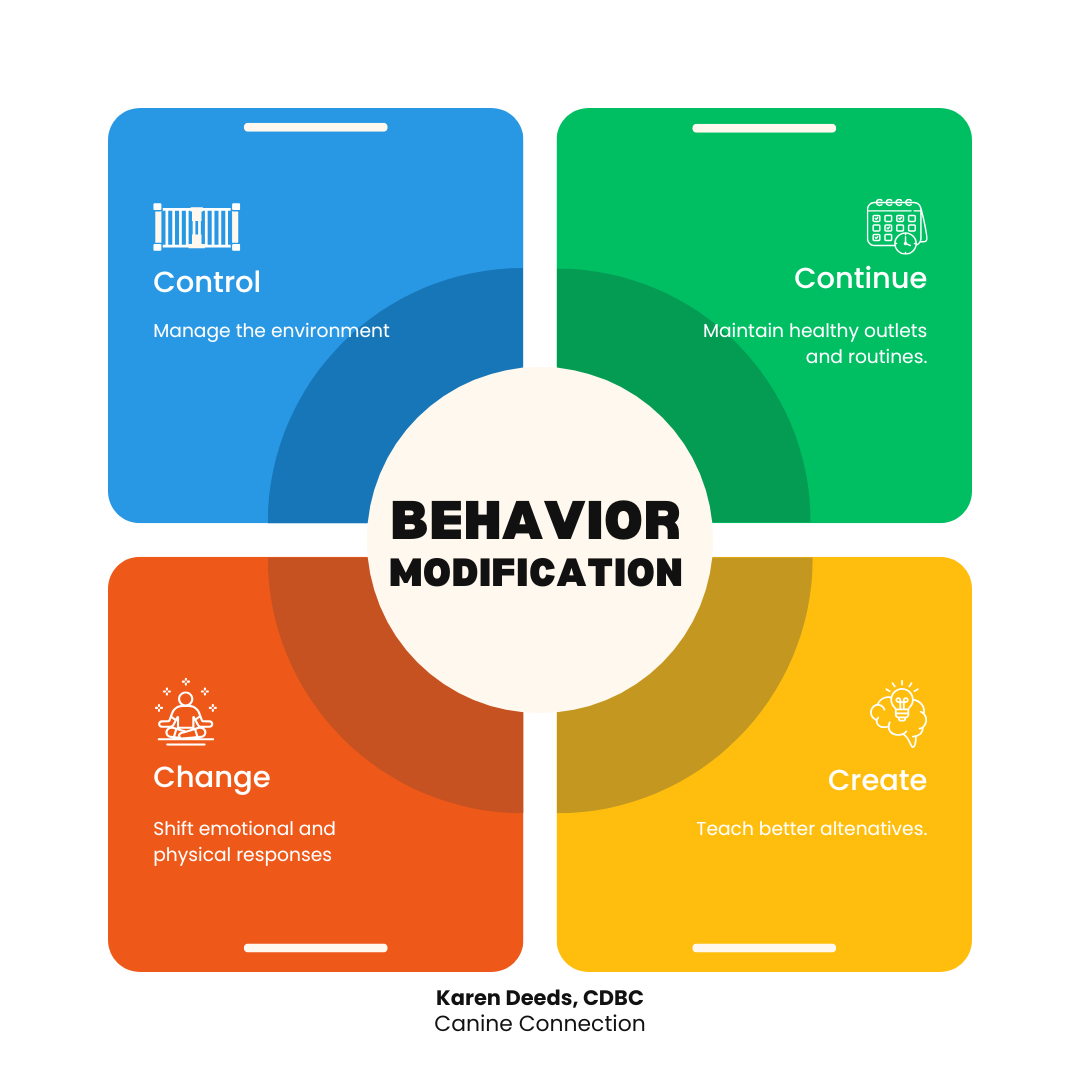
To make this simple for dog guardians, I often rely on a simple framework I call the Four C's of Behavior Modification: Control, Continue, Change, and Create.
1. Control: Manage the Environment
The first step in any behavior case, is to control the environment – blocking opportunities for the dog to rehearse the behavior we're trying to fix. This isn't about restricting your dog's life. It's about replacing tough situations with ones that support progress Without this, dogs keep landing in the scenarios where 'bad' choices are inevitable…and frustrated humans may assume the dog 'knows better.' Think of it like this: an alcoholic living in a bar won't stop drinking. They need distance from the trigger while learning new skills and stabilizing their emotions. Our dogs deserve the same courtesy – we must keep them 'out of the bar.'
If we skip this step, the dog is frequently put into situations where poor choices are likely. When this happens, guardians may assume the dog "knows better" and resort to punishment. But as the saying goes, an alcoholic living in a bar will struggle to avoid drinking. Until they learn new skills and their body adapts, staying out of the tempting environment is essential. Our dogs need the same courtesy—we must keep them "out of the bar."
Examples of effective management include:
- Feed resource guarding dogs in separate rooms.
- Remove high-value items such as bones or chews unless dogs are separated.
- Block windows or change rooms to prevent reactivity and window barking.
on its own.
2. Continue: Maintain Healthy Outlets and Routines
Management doesn't work alone. We must continue meeting the dog's physical and emotional needs. Sniff walks, enrichment, fitness work, structured play, and predictable daily routines all help lower stress and anxiety. A stable emotional state makes learning easier and behavior change faster.
3. Change: Shift Emotional and Physical Responses
- Desensitization - gradually exposing the dog to the trigger at a tolerable level
- Counter-conditioning - pairing the trigger with something positive to eliminate fear or anxiety
- Differential reinforcement - teaching and rewarding alternative responses to reduce frustration, conflict or behavior not rooted in fear
When the emotions shift, the behavior shifts. We're transforming the dogs internal state, not just the outer actions.
4. Create: Teach Better Alternatives
Finally, we must create appropriate behaviors to replace the unwanted ones. Ask yourself: What do I want my dog to do instead? If we don't teach this clearly, the dog is left guessing.
Replacement behaviors might include moving away, checking in with the handler, settling on a mat, targeting a hand or object. These give your dog a dependable script when life gets tough..
The Four C's in Summary
- Control the situation to prevent further rehearsal of unwanted behavior.
- Continue routines and activities that support emotional and physical well-being.
- Change the dog's emotional response through systematic behavior work.
- Create new, appropriate behaviors to replace old habits.
Together, these four steps build a humane, effective, and sustainable path to real behavior change – one thoughtful step at a time.


If you're working on heelwork, you're going to encounter mistakes. Crooked sits, forging, lagging, loss of attention — they're all part of the process. The key to handling heeling mistakes is recognizing that errors aren't failure; they're feedback. When a dog makes a mistake during heeling, it usually means the criteria were too high, the environment too challenging, or the dog wasn't prepared for that level of difficulty.
Instead of pushing through or correcting the dog, use mistakes as information. Occasional blips are expected. But if mistakes start happening repeatedly, that's your cue to pause and reevaluate your training plan. Backing up a step or two is not a setback — it's how you build clarity.
Whether working with your first agility dog or your fifth, the right foundation can play a huge role in your team's success. Join us for a conversation on how to build the skills you'll need as a team... even if you have minimal access to equipment.
It's easy to fall into the habit of only practicing skills you know that you and your dog are good at — in this episode, Julie and I talk about how to avoid that issue, and how to continually evaluate where your nosework dog is strongest, identify holes, and ensure you continue to progress in your training together.
The life stages our young sports dogs go through can come with dramatic changes and significant transitions - so what's normal? How do we decide what to prioritize? What are the current best practices when it comes to socialization? Join us for a conversation on all things puppy and adolescent!
Crystal Wing joins me for a conversation on how to build your training around a great relationship with your dog by balancing mindset and mechanics.
Ever have a situation where your dog refuses to move forward? In this episode Kathy Sdao and I talk about what balking is, why we think dogs do it, and what we can do about it.
Join handler fitness trainer, Liz Joyce, and me for a podcast all about how you can start — or restart — your fitness journey, gently.
Join handler fitness trainer, Liz Joyce, and me for a podcast all about how you can start — or restart — your fitness journey, gently.
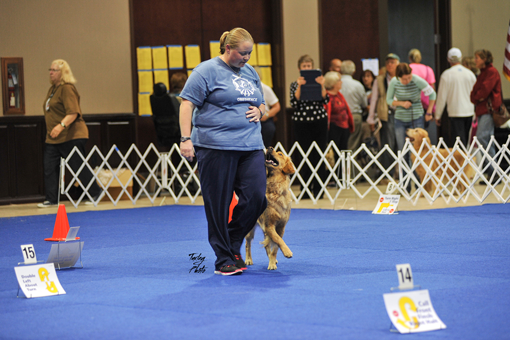
When you and your dog reach the Master level of rally, you'll face a whole new challenge: master rally signs. These signs go beyond the basics of sit, down, and heeling. They ask for precision, teamwork, and independence all at once. For many teams, this level is where rally really gets exciting—but it can also feel a bit intimidating. The good news is that with the right training plan, you and your dog can tackle these signs with confidence and even have a lot of fun along the way.
Heather and I discuss what skills you need to earn your CGC, the sticking points that can cause trouble for some teams, and how to decide if your dog is a good fit for therapy work from there.
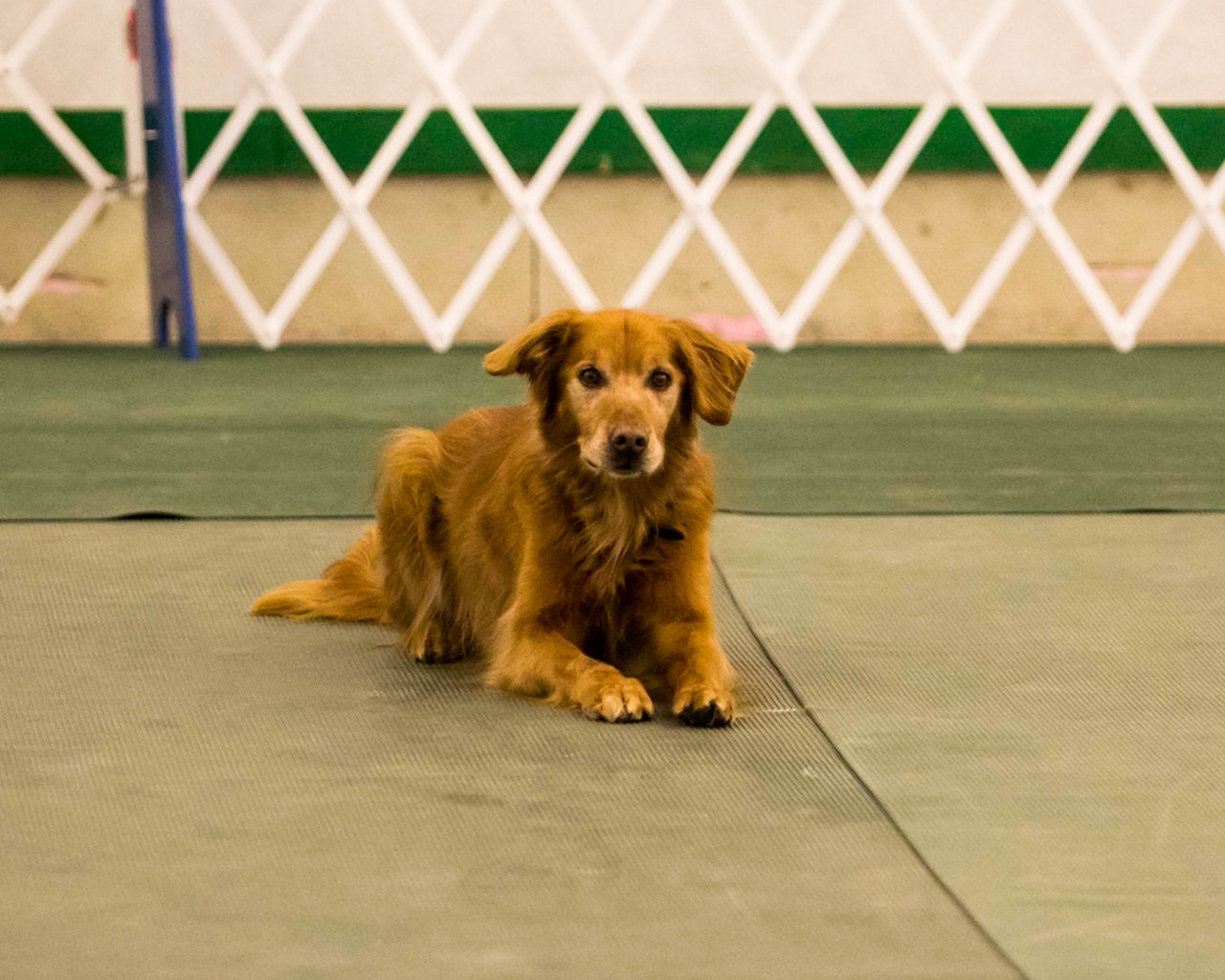
Using props for stays isn't required, but it can be incredibly helpful when you're first introducing the concept of stillness. Props provide structure, give dogs a clear physical boundary, and act as reminders to hold position. From platforms to gates and stations, the right prop can make teaching stays easier, clearer, and more effective.
Control Unleashed games and patterns can be a powerful tool whether you're working to rehab reactivity or build bomb proof sports behaviors. But how we do go from just learning the games to actually using them in the real world? Kim and I discuss exactly that in this week's podcast!
Agility puts a lot of strain and stress on our dogs' bodies... but fitness training can go a long way to ensuring they still enjoy a long sports career. Join me and Ashley for a conversation on how workling on canine fitness can improve your dog's agility skills, especially when it comes to technical jump training!
Talking about Negative Reinforcement can cause some big feelings in the positive training community - but in this episode Karen and Sophie take a look at when it's inevitable in our dogs' lives and what we should be thinking about for our own dogs.
Michael Shikashio joins me for a conversation around the impact arousal has on aggression, and how we should think about the two when working on behavior cases... plus, he shares a bit of behind-the-scenes info on the planning for the 2026 CANIS conference!
Transcription
Melissa Breau: This is Melissa Breau and you're listening to the Fenzi Dog Sports Podcast brought to you by the Fenzi Dog Sports Academy, an online school dedicated to providing high quality instruction for competitive dog sports using one of the most current and progressive training methods. Today I'll be talking to Michael Shikashio about aggression and arousal and the upcoming Canis Conference. Hi, Mike. Welcome back to the podcast.
Michael Shikashio: Thanks so much, Melissa. It's great to be back and I'm excited to chat. It's always a good time to start us out. Do you want to just remind everybody a little bit about you?
Michael Shikashio: Sure. I'm very honored to have done a few webinars for Fenzi Dog Sports Academy and also collaborating with Denise on a lot of different projects. So I own aggressivedog.com and that's my focus is working with just aggression cases.
And now I am more on the teaching side of things, helping other trainers learn about how to work with aggression cases as well as dog guardians and any information they want to know about maybe issues they're having with their own dog. And that's all at AggressiveDog.com.
Melissa Breau: Awesome. So we talk a fair bit about arousal here just from talking about dog sports. Right. But how do arousal and aggression impact each other?
Michael Shikashio: Yeah, so I think we should define arousal a little bit first because arousal is sort of looked at as like a four letter word word. Sometimes people in the dog world like, ooh, the dog's aroused, or that was an arousal issue and it's not necessarily a good or bad thing. It's actually can be both. We sometimes use arousal or use dogs that are more likely to have higher levels of arousal for performance.
Right. So dog sports people, the folks in your world, are often using arousal for their benefits because the dog's going to perform better at certain states of arousal. So arousal really is just a state of being awoken. Like when you wake up in the morning, you're aroused and not in a sexual way all the time. And that's another misconception of the word. It just means you're awoke, you're awake, and your physiological and psychological activation and that influences your alertness, your readiness to act.
And so there's differing levels of arousal. So how it can impact aggression, of course, is where we see dogs make poor decisions or they start getting into states of arousal where it's, they're having more difficulty with their cognition. So there's something called the Yerkes Dodson law, which is way back from the early 1900s, but there's a great graph. You can find it online. It just shows a graph and one is the performance and one is the arousal.
So the x axis is the arousal, y is the performance. And you can get like you wake up in the morning and you're lower state of arousal, but as that goes up, maybe you've had your first cup of coffee and you're starting to get awake, your arousal level might go up a little bit. And as that continues to curve up, there's going to be a point at which it is going to start curving down, meaning you're over aroused and that's going to impact your cognitive ability.
So the same thing can happen with dogs where if they are hitting these states of what we'll call it over arousal, it impairs their sort of cognitive functioning, which makes them less likely to respond to those cues. That's why we might see dogs respond less when they're like fence fighting with another dog on the other side of the fence. I can tell you most dogs aren't going to come when called when they're at that state of arousal unless they have a real high fluency in that type of behavior.
So with aggression, again, it is often the fuel for the fire. And what is making it more difficult for the dog to respond to our cues, that we've tried to train them in those kind of moments and we'll talk more about what we can do in those situations as well.
Melissa Breau: So why is kind of understanding that so important when working on behavior cases?
Michael Shikashio: Yeah, so if we don't recognize states of arousal, we're kind of dealing with a highly fueled situation.
So I love to use the fuel analogy a lot, and I use it also with arousal. So think of like a, think of a car, right? If it's, if it's low on fuel and something happens, you're less likely to get an explosion. But the more fuel you add and the more fuel you pump into that engine. Think of the brain like the engine and you're more likely to have difficulty controlling that.
So as the engine revs up, as you pump more fuel in there, that's going to make it more of a risky situation. And you also have to think about other stressors. So other things impacting the environment could be weather when you're driving that car, a slippery road that can make it more risky. Same thing happens with aggression cases. I always look at not just the antecedents or the things in the environment that are triggering that aggressive response, but what's underneath that hood, so to speak.
What kind of fuel is in there? The Arousal level. And if it's too much fuel and you're driving on ice, you're more likely to have an accident. And so always think about other stressors, like, you know, maybe the dog's had a real difficult day, or the dog just saw another dog that barked and lunged at it. Now we're adding other stressors. We might be spiking the arousal a little bit more, and that's where it's going to make it much more likely for that aggressive response, or in our car analogy, the accident to happen.
So what do we mean if we say that, you know, the arousal spills over into aggressive behavior? What is that phrase? Yeah, that's a common saying, and I definitely use it. I'm guilty as charged of using that saying a lot, because it does look like it. You see a dog, let's say, in a dog park. That's another good one. We see a lot is, you know, dogs playing very vigorously.
And we see that, you know, we could. We would label it as, oh, that dog's highly aroused, based on what we're observing with their behavior, their body language, some physiological signs, maybe their pupils are dilated, maybe they have their hackles up. So we're saying, oh, that dog's in a high state of arousal, and that's why they spilled over into an aggressive response. I think we should probably move away from that labeling a little bit, because arousal isn't necessarily the direct cause or the antecedent or the trigger for the aggression.
It's just a fuel. So it's important not to think arousal is going to always cause aggression, because that can become problematic, too, because especially in the sport dog world, we saw it, we kind of get like, oh, we don't want those high states of arousal because it could spill over into aggression, but it's just making the aggressive response more likely because of the higher arousal. So think of it maybe more as.
I guess we should come up with a different saying. Help me brainstorm this a little bit. Arousal fuels aggressive behavior. Maybe is probably a better way. So because in the dog park analogy, for instance, you have two dogs highly aroused. It's more likely for them to go into aggressive responses to each other, but it's not the direct cause. It's usually something like, ouch, that hurt, you bit me a little too hard during your play bite, or you jumped on my sore shoulder, or you don't know how to play well, or you don't communicate well.
Those are the direct antecedents for the aggressive responses. But they're much more likely to happen than if the dogs were just relaxed and calm and around the house. And maybe one gives the same dirty look that they did in the dog park, but they weren't at high levels of arousal. So, yeah, hope that answers the question and hope we can move away from spilling over into some other label that will come up with at some point, feeds it or.
I don't know, I'm trying to think of what other phrases might work, but maybe folks, if they listen to this, they can brainstorm some over in the alumni group. So if we observe that we have a dog who maybe tends to tip over into aggression, and we can tell that their arousal level is going up, are there ways to redirect that into more positive or at least neutral behaviors?
So it depends, you know, because it depends on the state of arousal and that dog's ability to. To sort of modulate that. And that is a part function of experience in the training that we do with dogs. But it's also part of their physiological processes. Like, we don't have control of our. Our own arousal. Sometimes, like, I can have this cup of coffee that I have in my hand, and if I have two shots of espresso in it, my heart's gonna probably.
Heart rate's probably gonna go up and increasing my arousal. So I don't have direct control over that. I can stop drinking espresso. I don't have direct control over that. Right. So going back to the car analogy, we can think of like, steering a car at high speeds, right? When you're at a lower speed and less gas is going into that engine, you're gonna have an easier time controlling the car.
But at those higher speeds, then you're going to have. It's more risky. So you have to have better timing, just like we would with our cues to a dog. We see a dog staring at another dog, their hackles start coming up, they might start barking, and we're gonna have a harder time often getting that dog to respond to our cues. So good timing. Before we start seeing the car going into a slide or before we get too close to that car in front of us, we've got to have good timing to do something proactively to get the dog or the car out of that situation.
And sort of sidetracking here a little bit, you also want to think about the breed of dog. Just like the type of car, you're going to have some cars that are higher performance, that can go to higher speeds much more quickly. You can have turbo boosters in them. Right. And so think of some of your dog breeds. Think of Border Collies or Malinois or any working line breeds.
They're going to be like driving high performance cars. So your timing and your control has to be even better with certain breeds or cars. Right. So with dogs we talk about stimulus control, which is putting, you know, when a dog is going to respond to that antecedent cue we give them, or saying, hey, Fido, come and putting that on stimulus control, which is just lots of good training and repetition, as we know.
And that's going to be more likely for that dog to respond in those high arousal situations because it's been practiced and those sort of pathways in the brain have been more firmed up just like we would in a car. We're going to make sure we have good control, good brakes, good tires. We've practiced driving. If it's our teenager, we've brought them out driving with us, you know, so it's, that's one part of it.
So if we're going to redirect it, we're going to want good stimulus control. Sometimes though, you have to go over to management because the dog, it's not, they're not going to respond to anything. So we're just going to have to move them away from the issue that they're having with the arousal. And even in dog sports, we might see the same thing. Not in an aggressive sense or seeing aggression, but we might see some performance issues or.
You got totally out of my wheelhouse because I'm not a dog sports enthusiast like the community here. However, I do see obviously the parallels with aggression and not having a dog not respond. So there's actually, as I was thinking about this question, there's lots of great people out there that talk about the conditions in the brain. And one of them is Dr. Kathy Murphy, who I think you know, and a lot of the listeners probably know, who's a neuroscientist.
And she mentions the frontal cortex. Right. So think about the fuel in the engine. And if we're throwing lots of fuel, we're revving that engine. There's a point where that engine can fail. And so the same thing can happen in the dog's brain. That frontal cortex, the neurons start to fr. And that's also think about that Yerkes Dodson model. Once you get over that hump in that curve, you get into these poor states of cognitive performance.
The same thing's happening with the dog's brain. That frontal cortex is frying. The neurons are. It's like too much fuel going in there. And that's where you have those issues. And that's where the dog might not listen at all. It might not even hear you. So it's like your engine is overheating and you need to let it cool off. So what do you do? You've got to pull off to the side, get the dog away from the stimulus and then let it cool down, get them focused again.
And then if you're working on something, you can try again after. Suddenly it's an aggression issue. You want to think hard about the management and reset and refocus on what your training plan is going to be. So, yeah, there's ways to. Those are the direct ways. We can talk about indirect ways as well and how we can build tolerance to that.
Melissa Breau: Yeah, yeah, I definitely want to go there. So how can owners help their dogs kind of build. Use the word tolerance. I think it's a good word to arousal inducing situations. So we've got a situation that we know is likely to cause that spike. We want to go to the dog show still, or we want to be able to take our dog on the walk past the dog that barks at the fence. You know, how do we get there?
Michael Shikashio: Yeah, so I break this up into a couple different initial paths that you have to take. So we talked about what to do in the moment a little bit. We'll talk more about that. But it always starts just like any behavior case. We want to start at home. We want to start looking holistically at the dog because there's a lot of influences to arousal, such as stress, such as what happens in the environment.
So first thing I'm going to do is look at the environment of the dog and say, what kind of stressors are here? What can we do to reduce that? Because especially if a dog that's experiencing chronic stress, that makes it much more likely for them to go into high arousal situations or become more highly aroused because they're hypervigilant. They're sort of on edge, if I was going to label that.
And there's a lot of anxiety components to it too. So if we can reduce that in the environment to start with. So at home, is there lots of traffic, people coming in and out of the home? Is there a lot of dogs barking from the neighboring fence? Is there people passing by and the dogs at the window barking at them all day long? I want to significantly reduce that because that's going to help with the dog's arousal.
We need to have more, more time in the day where the dog can kind of regulate and relax, right? The next thing I might look at is medical, too, because medical issues, certainly if we're in pain, arousal or hypervigilance around something that could potentially be painful, just like us, if we're having some sort of injury, we're going to be potentially more likely to go to higher states of arousal or readiness, that responsiveness I was talking about earlier to deal with that oncoming threat that could cause us pain.
So always important to look at medical conditions because that. And that's just in general for any behavior issues, right? Look at nutrition, too. I know that if I ate a box of Twinkies or had my two espressos, I think I'll be in a higher state of arousal than if I was to have a nice, you know, cup of tea and maybe just some fruit or something for breakfast.
So nutrition does matter, you know, and that's my, again, not my area of expertise. However, I do think we should do our diligence in learning about what's best for our dogs and their nutrition, what they're eating and how it impacts their behavior and their arousal and their physiology throughout the day. And next up is really important, too. Obviously, enrichment and exercise is something everybody talks about and knows about these days.
But what type of exercise and what type of enrichment is the dog getting? And is it appropriate for their breed, for their individual selves? Because sometimes we see dogs, they're put into high states of arousal in the name of exercise. So think of like a treadmill, right? And there's nothing wrong with treadmills per se. It's how you use them. So if we have a dog that doesn't know how to modulate the arousal, we throw them on a treadmill, thinking we're going to get that out of them because we're going to make them tired.
You might get them tired, but that doesn't mean you have changed the arousal, that frontal cortex area, right? So appropriate exercise and enrichment. For dogs that have issues with arousal, I prefer much more relaxed exercises like going for a nice relaxed sniff walk in the woods or hike off leash somewhere. If possible, go to a sniff spot, you know, place you can rent, like the Airbnb for dogs.
And those sniff spots, you can go and just let the dog sniff around, get that enrichment. But it's much lower arousal. It's at a lower arousal level. Next thing you want, of course, think about is sleep and rest. That is another one that dogs, especially in aggression cases, often are not getting enough of because they're constantly hypervigilant so you can see, kind of think about this vicious cycle where the dog's like, I'm tired, but now I'm on edge.
And like, now this person's gonna come by the house. And so they actually don't get enough downtime and ability to regulate and come back to homeostasis. Right. So I often will ask clients, how much sleep does the dog get? And I then ask them, how much are you sure that the dog's getting that much sleep? Because they don't. Sometimes I don't know. And a lot of our clients are going to think, oh, they sleep all night.
Well, that might be seven, eight hours for the average human, but that's not enough for dogs. And dogs especially experiencing high states of arousal are going to need even more sleep. Just like if we are doing lots of high arousal activities during the day, we're going to be fried by the time that the day is over. So it's important. Sleep is in there. And then I think one other part of the sort of holistic package is the routine.
So having a nice set routine, that's predictable. So dogs thrive on predictability because they don't know what we're going to be doing during the day. So the more routine we can create is going to make it less arousing. So just like, if we don't know what time that drill instructor is going to come running into the barracks with the horn glowing, you guys got to get up now.
That's going to spike arousal very quickly versus if we know. All right, I've got to get up at 5 in the morning to do my drills and whatever. And that's, that's going to be much more predictable. So those are the things I look at first to help build tolerance, but then the actual exercises. The dog sports people are the folks I go to to teach these things. So helping the dog go into higher states of arousal, you might use something like tug, for instance.
Dogs, we can argue, are probably in higher states of arousal when they're anticipating a game of tug. And we can modulate that. We can get them really ramped up. We can use our movement. And by the way, movement really is one of the things you want to look at as a human, how much that impacts their arousal. So the more I obviously run and move quickly, that's going to escalate their arousal level or their state of readiness for that tongue toy.
So we can watch for that. We can say, okay, this dog's getting more excited, the eyes are getting wider, the bounciness is More there. So this dog's getting to higher state arousal. Can I ask for the dog to do something in that moment? Can I get a sit, can I get a down, can I get a hand? Touch whatever it is, whatever is most appropriate for that dog and breed.
Can I get that in that higher state arousal? And that's going to really help the dog learn how to respond to those cues in higher states of arousal moments, whether it's a negative situation or a positive situation, like playing tug. So practicing those things in a variety of contexts and a variety of situations can be so helpful because guess what? When you're out there with your dog that tends to bark and lunge at other dogs.
You're going to see that response to the cue. But you can also integrate those games that you're using to control arousal in those moments because it's gonna, when you think about it, feel very similar to the dog. I'm feeling a certain way. The dog doesn't know my heart rate, it's going up. But they're starting to feel a certain way and they're also seeing that they also probably feel some of those same similarities when they see that other dog that they typically react to.
So you can use that activity that the positive balanced emotional activity like tug in the environments where those negative balanced emotional situations like seeing another dog happen, you can start to shift and transfer that through classical conditioning, but it's also through controlling that arousal and getting that responsiveness to cues. So that's probably one of the most important things you can do is like practicing, you know, and you can go back to the old days like go wild and freeze.
And there's different types of games that people used to play. And again, dogsports people, other people I turn to. And in fact, if you watch the webinar that's coming up, you'll see good examples of that. And just a few other quick mentions too, is there's sometimes people talk about relaxation protocols like Karen overall's relaxation protocol. Dr. Chris Pachel has one, Nan Arthur has one. So, Suzanne Clothier, there's quite a few different versions of relaxation exercises.
I highly recommend those because it also helps the dog learn to be calm. Now there's some arguments of like, are we really teaching? Are we really teaching, like how to modulate arousal or is it a function of. Here's the context. You're near your handler, you're near your guardian, and they're reinforcing you for relaxing. Is it more so that. Right. So is it the chicken or egg? Right. Is it the behaviors that's reducing, you know, that calm, relaxed behavior, the dog on a down on a mat or something like that, is that reducing the arousal or is it.
Because we're doing that, it's going to reduce arousal, which then creates the calm behavior. So there's a lot of arguments around that, but for me, whatever, as long as it accomplishes the purpose, yeah, it definitely helps. I've seen it help many dogs. Where dogs learn relaxation exercises, however you want to call them or however you want to define how they're working, I find that they work well. So that's one.
And then massage is also highly underrated. Massage and movement and things where dogs. Because when you think about tension in the body and arousal, you think about tight musculature and sometimes that can impact the dogs physically. So same thing is just, you know, again, there's other people that are much more savvy about this stuff than I, but I do like to talk about it because I find can be also very helpful teaching the dog how to relax when being touched, also helping them physiologically and physically.
And you know, you can incorporate that as well in moments where you're having issues, like outside, let's go relax on a mat while you see other dogs at a distance and you get the massage. Or we practice relaxation exercises. So there's a variety of approaches and you got to find what's best for your dog because you might have heard me mention, okay, relaxation and massage or high arousal tug game in the presence of the stimulus, you got to work see what works best for the dog and sometimes both and sometimes one or the other.
So yeah, so that's my general overall, like what to do to help dogs. And you can see it's much more holistic than always just in the moment, a lot built around it. It does feel a little bit like kind of the core pieces there are. We're going to take day to day life and try and make day to day life a little less arousing so that we're, you know, starting with a little bit lower baseline and then we're going to try and build fluency into behaviors so you can think when you are a little more excited.
And we're going to try and build some skills so that you have the ability to modulate that arousal yourself a little more. Is that kind of three?
Melissa Breau: Yes. Yeah.
Michael Shikashio: And one other thing, just another good example to think about real quickly is just like shelter dogs where they don't, they aren't getting the things I just talked about. So you might see lack of sleep, you might see, of course, lack of exercise.
Routine is sometimes there, but not always. Sometimes they're going to have undiagnosed medical issues because maybe they just came into the shelter, so. And they're maybe on a new nutrition or something. So there's a lot of variables in the shelter environment that can cause these arousal issues. And certainly if you talk to any shelter team member, you're going to hear about arousal and the dogs jumping up and biting leashes and biting clothes and those, those are all functions of over arousal and frustration, of course, as well.
Sort of a cousin of arousal. But that's a perfect example of like, once we start to shift into the things the dog needs, that enrichment, that sleep, that exercise meeting the breed needs, giving them olfactory outlets to go sniff things like that, you see a significant reduction in the arousal. So. And you don't. And a lot of times you're not really doing anything. In those moments, you might have a good handler that can handle, like, all right, the dog's biting the leash.
Here's what I do and what did I say before is movement. So good handlers, where the dog's biting the leash or something, they relax their own body, they, they slow their movements and the dog often follows suit. So that can be helpful in the moment, but really you won't see a ton of change in those type of moments until you address those other holistic factors.
Melissa Breau: So you mentioned the webinar kind of in passing, so let's talk about that a little more.
So you have a webinar on arousal and aggression coming up on September 4th for Fenzi. Talk to me a little bit about kind of what's going to be included, what are you covering and maybe who should join us. Yeah, definitely. So it's going to be about what arousal is, what it isn't. Some exercises to help. I mentioned there's some great dog sport trainers that I've asked and some other trainers as well, to give some demonstrations of the exercises they use.
So you'll see that in the webinar. And of course, I'm going to be talking about how it all relates to aggression and what to look for, especially in problematic cases where you are seeing arousal being the main component of those aggressive responses. So we're going to talk about the body language involved, what to look for, how to modulate it. It's kind of a soup to nuts overall look at arousal and aggression.
So I'm excited to do this one because it's a topic that a lot of people ask me about. So it's. So it's good for dog guardians and trainers as well. That might be working, these kind of cases.
Melissa Breau: Awesome. All right, so I want to switch gears for a little bit here. So you recently made a kind of big announcement. Next year, next October, you're going to be hosting the Canis Conference. Can you share some of the details?
Michael Shikashio: Absolutely. So this was born because I was approached by APDT, so the Association for Pet Dog Trainers, and they're now known as APDT International, about hosting a joint conference. And I thought to myself, what if we just get everybody that's holding conferences together? Because there's. There's a lot of conferences out there and it can be difficult to decide if you're a real conference junkie.
Especially you can be like, all right, which one do I go to? Which again? Because you can only get away so much and afford so much. So we thought, why don't we try to get everybody who wants to get involved in this into one giant conference? And the goal really for it is collaboration and connection. It's about getting people together. And because we see enough divisiveness and fractured silos and things like that in our industry, right.
A lot of people arguing all the time, social media. And it's just getting worse and worse, I think because of the nature of social media. And we start to see all these smaller groups sort of splinter off and form their own groups and have their own little conferences. And there's nothing wrong with that because you certainly have specialty conferences. But we decided, you know, let's try to shift that trend a little bit of all of this divisiveness and bring everybody together in one place where we can all talk.
Because we know that when people are in person with each other, it's so much different than when they're behind a keyboard talking on social media. It is so much different. And it's just. That's the goal here, is to get everybody in one space, not only from the dog training world, but. But from the veterinarian science world, the shelter world, dog sports, of course, you know, so all of this coming into one space is going to allow for even more collaboration and more idea sharing and lots of, I think, ways to connect.
And that's the most important thing for me. It's just, it's always been like that. I've always been. I always enjoy connecting people and just introducing people because I find that when people collaborate, some beautiful things come out of it. So it's going to be. There's going to be actually Eight different organizations represented here. So it's Aggressive Dog and APDT. We also have Kim Brophy's Family Dog Mediation Group.
IAABC foundation is going to be there. Best Friends Animal Society for the shelter track, nacsw, which is in the national association for Canine Scent Work. And of course, Fenzi Dog Sports Academy will be there. We just picked up the companion Animal Research and Education Lab and the Canine Science Symposium group. So that's going to make up our veterinary science track. And there are going to be five tracks, I can't remember if I mentioned that, which is training behavior, shelter, veterinarian science, and dog sports. And of course, we're going to be having the FDSA camp there. So that'll be making up our dog sports track.
Melissa Breau: Yeah. All right. So you kind of talked a little bit about the idea, kind of how it came together, but for you personally, kind of what inspired you? Why is this important for you?
Michael Shikashio: Breaking down silos, breaking down walls, building bridges. It's again, my goal is to just connect people because I think a lot of trainers approach me and sometimes they're really afraid of stepping out into the dog training world or saying anything on social media because of their fear of the critiques and the attacks.
And a lot of that is born out of all of these walls that we're building over different topics. Obviously, tools come into mind. You know, people that raw feed, you know, things like that. There's. There's arguments all the time. So people actually really afraid of. They're hesitant. You know, there's this hesitancy to connect. And that's a shame because you find. I found that there's some really brilliant trainers with such incredible ideas, and they approach me with it, but they're just afraid to put it out there.
And what a shame, right? What if the next really groundbreaking strategy or technique or something that's going to really help dogs and their people is out there? But that person's like, I'm just gonna. I don't feel comfortable sharing it and it never gets out there. I mean, that's such a travesty to me, and I think it's terrible. It's not good for the growth of our industry. It's not good for dogs and their people.
So that is what inspired me is let's just, let's, you know, let's drop down these walls. We all have differences regardless, right? I could be. I have differences with people in, you know, the Aggressive Dog group. And people within FDSA camp probably have differing opinions on all kinds of things and nutrition or how to teach weave balls or whatever you guys do. And that's okay. You know, we can do that.
But it's so much better to do that in person because people are less likely to say something mean to your face versus when they're behind a keyboard. So that's another part of it. It's just. Just bringing people together. And finally, again, I think I mentioned it, but just getting the different industries together. So because veterinarians, veterinary behaviorists have a lot to share with trainers, trainers have a lot to share with the shelter folks.
Shelter folks have a lot to share with the veterinarian. So you see how it's. All this potential collaboration is what the aim is. So let's get together.
Melissa Breau: Yeah. So what can attendees expect? I mean, you talked about the different tracks. Can they just kind of sit in on anything they want? Can we do a little bit of this and a little bit of that? So this is going to be.
You know, we've had lots of. If anybody's been in the conference circuit over the last, like, half a decade or so, we've had a lot of great conferences, but a lot of them have been solemn because we went through the pandemic and that and all of the, you know, difficulties happening in the US and across the world. And a lot of it has been focused on, you know, being.
Having spaces to talk to one another and support each other, hug each other. You know, I mean, that kind of thing. Like, really, that's. And that's a good thing. But what's been missing is let's have some fun, right? I think it's time to have some fun, celebrate, you know, and forget about the world's troubles for just a minute and come together and just have a. So that's the.
That's what's going to be different here. It's going to be a different experience. We are really, you know, shifting towards the music festival theme. And I use this analogy a lot. Think of it like Coachella or Lollapalooza. Bunch of different bands getting together. We're all going to have fun. We're actually designing some of the speaker graphics where it's gonna be like a. Like a music festival poster. You ever seen those?
Where it's like different bands and you get to see who's coming. So that is. And the attendees can pick up to six. We actually have six different rooms going at any one time, so. And you can choose the track you want to go to. You don't have to stick to one track, though. You can say, all right. I wanted to check out this talk on shelter behavior. Oh, there's a good veterinary talk there.
Oh, and this one, I'm gonna go check out the. The dog sports and check out the dogs working in the FDSA camp. So there's no restriction to what you can do. You can kind of go to each one. There are limited working dog spots, so if you want to sign up for the FDSA camp, there's a very limited number. And so we are going to have working dogs there as well as demos.
We're going to have a exhibit hall with over 100 exhibitors, so you get to bring your wallet and an extra suitcase. Time to go shopping. Yeah, that's what happens at dog conferences. You know, you end up. End up going with a bunch of stuff for your own dogs. So, yeah, think of it. We're gonna have an amazing cocktail reception at the end of the conference. We're gonna have special events throughout.
So Dr. Patricia McConnell is coming in. She's not gonna be speaking, but she's gonna be doing some special events. There's an indoor golf, indoor. What do you call it? Go kart track, right next door to the hotel. So we can literally. You can literally walk from your hotel room to the indoor go kart track. There's a topgolf. There's tons of restaurants and other fun experiences. There's, like, one of those 80s arcades there.
There's just so much to do in the area. So. So think fun, exciting experience. Still supportive, collaborative, inclusive. But let's bring some fun into the environment now.
Melissa Breau: So I think we skipped a step there. So do you want to just kind of verbally. Because I don't think we've said it yet where it is and the dates.
Michael Shikashio: Oh, yeah. So Schaumburg, Illinois, October of 2026. And it is. So Schaumburg is, like, just north of Chicago.
It's technically part of Chicago, but it's really easy to get to. So we were smart about choosing which way you go from the airport there. If you go one way from the airport, it's like an hour of traffic. But the way to Schaumburg is, like 20 minutes from the airport. And it's a beautiful location. I might be biased, but, like, they completely redid the whole hotel convention center.
It's just absolutely, absolutely amazing place. So, yeah, Schaumburg 2026 and not 2025. People are. Some people are like, I can't wait to go next month. I'm like, it's a month in a year? More time than that. Yeah, but, yeah, we needed time to plan something this big, so we did start it quite early. But yeah. Yeah. So. And where can folks go for more information on the conference? Canisconference.com. so that's Canis, like Canis Familiaris. Canis Conference.
Melissa Breau: Awesome. All right, any final thoughts or key points you kind of want to leave folks with on either topic?
Michael Shikashio: Yeah, you know what? I've been. Since we're talking about social media and things, I've been seeing a lot of good discussion lately. And of course, Denise is always coming up with great topics and bringing reasonable discussion into our role. And that's what I want to think about, is think of community in community building.
And that's, again, the goal of this, the goal of this conference, the goal of us talking together on a podcast. So all this is just building community. And I think that what we're seeing too, is especially on social media. And I think the final thought for me is, do you want your legacy to be breaking people down to build up your following, or is it to build people up to build your following?
Because there's really two types of accounts on social media. When you see it, you have those that criticize others to create controversy, to build those algorithms so that more people comment, more people come in seeing the controversy, and that's so damaging to our industry. So I think, you know, think about the legacy you want to leave. Is it going to be. You're going to be known as, ah, they were just great.
So supportive, bringing people up, never criticizing, or do you want to do the opposite? So, yeah, so that's my final thought there. Very important one for sure.
Melissa Breau: Well, thank you so much for coming on the podcast, Mike.
Michael Shikashio: Thank you. I appreciate the time.
Melissa Breau: Absolutely. Super excited to have you. It's always a good conversation. So thank you and thank you to all of our listeners for tuning in. We'll be back next week.
Don't miss it. If you haven't already, subscribe to our podcast in itunes or the podcast app of your choice to have our next episode automatically downloaded to your phone as soon as it becomes available. Today's show is brought to you by the Fenzi Dog Sports Academy. Special thanks to Denise Fenzi for supporting this podcast. Music provided royalty free by BenSound.com the track featured here is called Buddy. Audio editing provided by Chris Lang.
Thanks again for tuning in and happy training.
Credits
Today's show is brought to you by the Fenzi Dog Sports Academy. Special thanks to Denise Fenzi for supporting this podcast. Music provided royalty-free by BenSound.com; the track featured here is called "Buddy." Audio editing provided by Chris Lang.
Thanks again for tuning in -- and happy training!
Services we provide

Structured programs with step-by-step guidance to build strong skills.
50 000+
Happy customers
Why choose us?
We offer a variety of online training solutions designed to help you and your furry friend achieve success