Obedience (55)
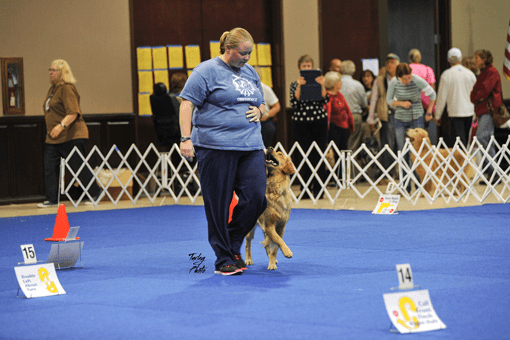

Rally foundations training usually becomes a hot topic when teams start feeling frustrated, stuck, or caught off guard by how hard rally suddenly feels. A lot of handlers start rally excited and confident, especially when early training goes well. Then something shifts. Courses feel tighter, dogs lose focus, heeling position drifts, and confidence dips.

If you're working on heelwork, you're going to encounter mistakes. Crooked sits, forging, lagging, loss of attention — they're all part of the process. The key to handling heeling mistakes is recognizing that errors aren't failure; they're feedback. When a dog makes a mistake during heeling, it usually means the criteria were too high, the environment too challenging, or the dog wasn't prepared for that level of difficulty.
Instead of pushing through or correcting the dog, use mistakes as information. Occasional blips are expected. But if mistakes start happening repeatedly, that's your cue to pause and reevaluate your training plan. Backing up a step or two is not a setback — it's how you build clarity.
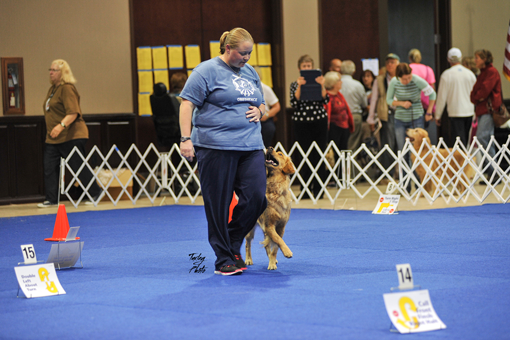
When you and your dog reach the Master level of rally, you'll face a whole new challenge: master rally signs. These signs go beyond the basics of sit, down, and heeling. They ask for precision, teamwork, and independence all at once. For many teams, this level is where rally really gets exciting—but it can also feel a bit intimidating. The good news is that with the right training plan, you and your dog can tackle these signs with confidence and even have a lot of fun along the way.
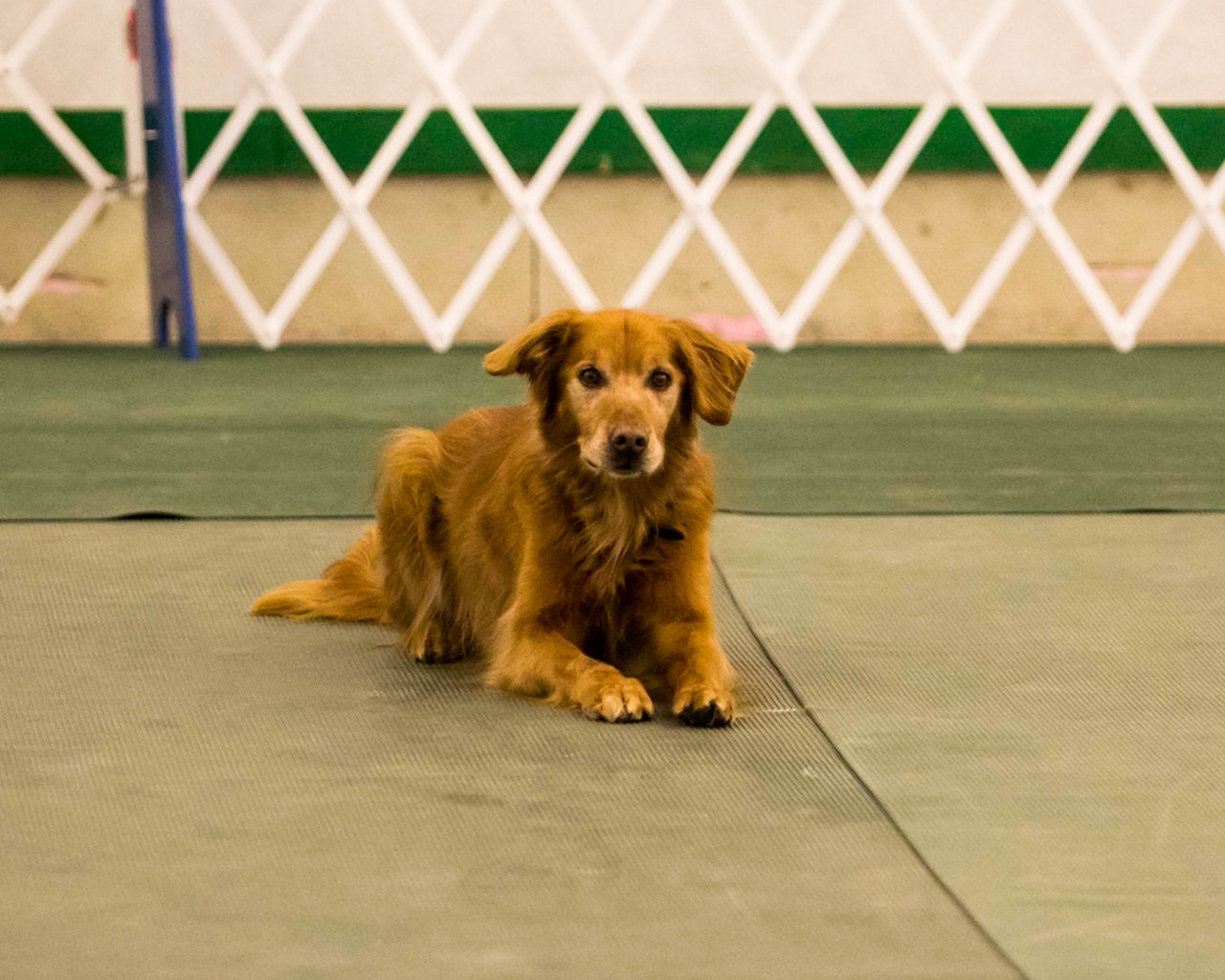
Using props for stays isn't required, but it can be incredibly helpful when you're first introducing the concept of stillness. Props provide structure, give dogs a clear physical boundary, and act as reminders to hold position. From platforms to gates and stations, the right prop can make teaching stays easier, clearer, and more effective.
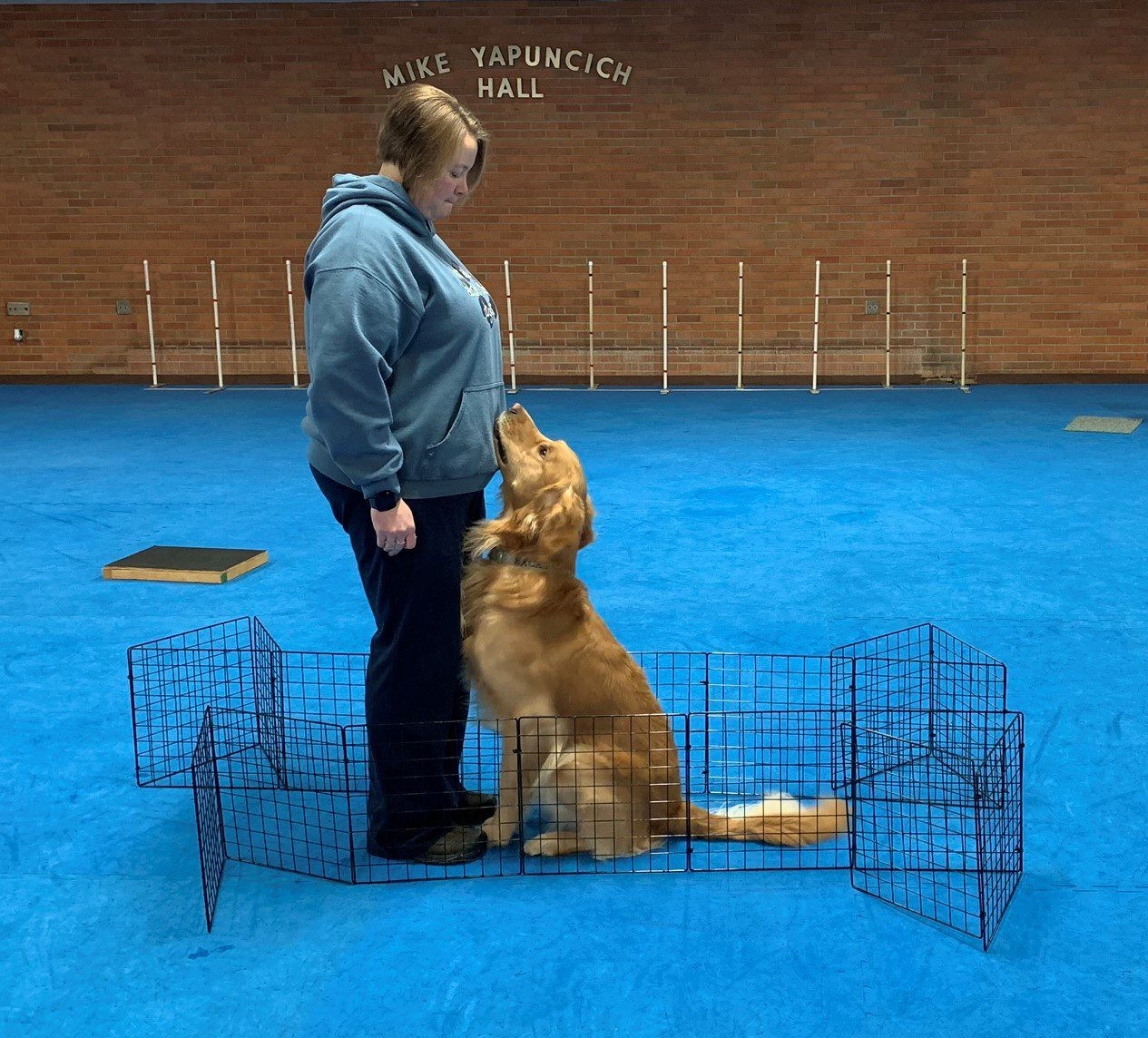
When it comes to teaching Rally behaviors, props can make a huge difference in both how quickly your dog learns and how cleanly they perform the skills. Whether you're introducing something new or polishing an existing behavior, the right prop provides clarity, precision, and support for both dog and handler.
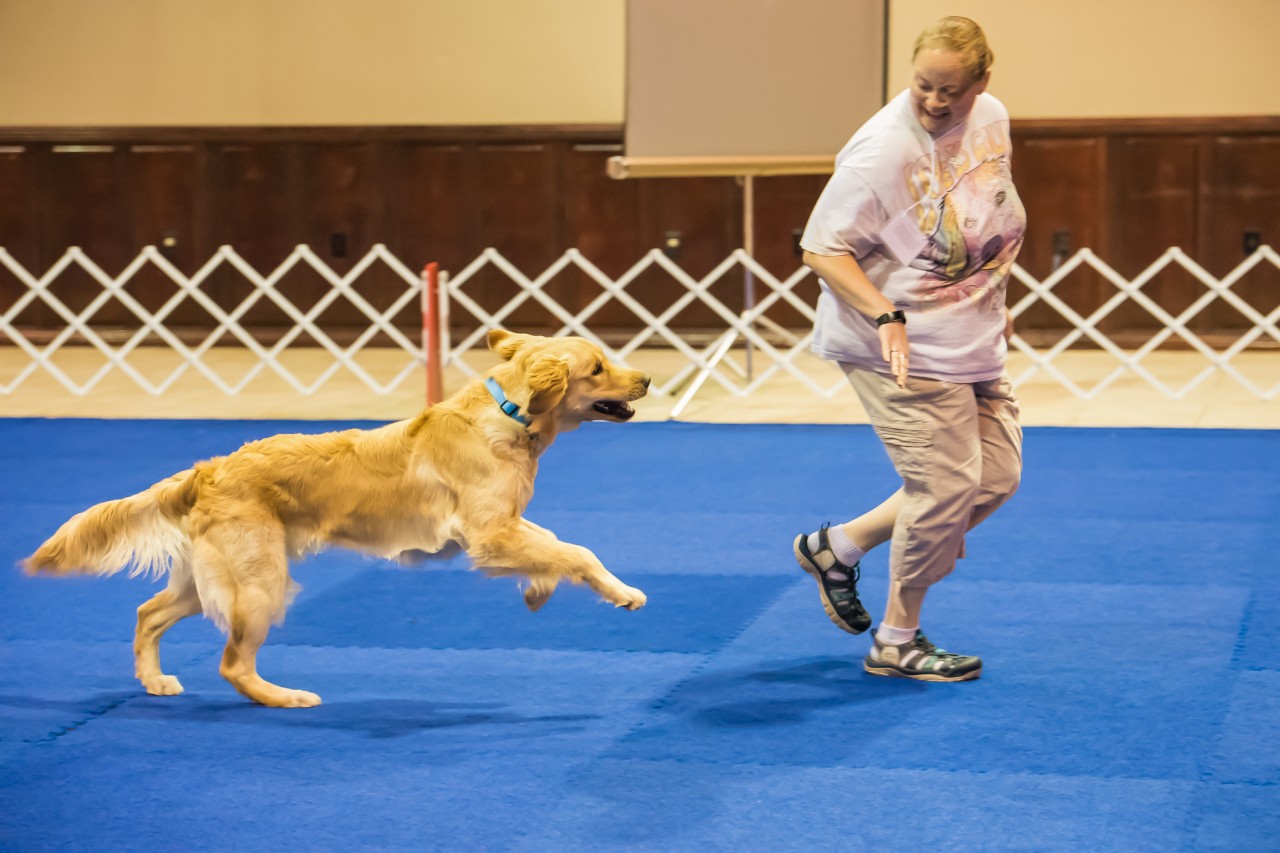
Why Reward Placement Matters: When a dog receives reinforcement, they're likely to repeat not only the behavior they were doing, but also the position they were in and where they were looking when the reward arrived. In heeling, this means that if you feed your dog out in front or with their head turned, you're unintentionally reinforcing forging or crookedness. On the other hand, if you carefully place rewards right at your left pant seam, you help reinforce a dog that is in heel position, focused upward and back, engaged and aligned. Reward placement is shaping—without even asking for more effort.

You've taught your dog the exercises—but do you know how to show them in the ring?
Join Petra Ford for a deep dive into what actually happens during an AKC obedience trial, from Novice through Utility. She goes beyond the rulebook and training videos to explore the flow of a performance—what the judge says, how you respond, when you can talk to your dog, what you can do during transitions, knowing where to go, how to use subtle cues and handling strategies to help your dog succeed, and more. Originally aired as a facebook Live in the FDSA Student Alumni Group, we've downloaded the recording and are re-sharing here for free.
If your dog knows the exercises but you're unsure what to do when you walk into the ring—this recording is for you!
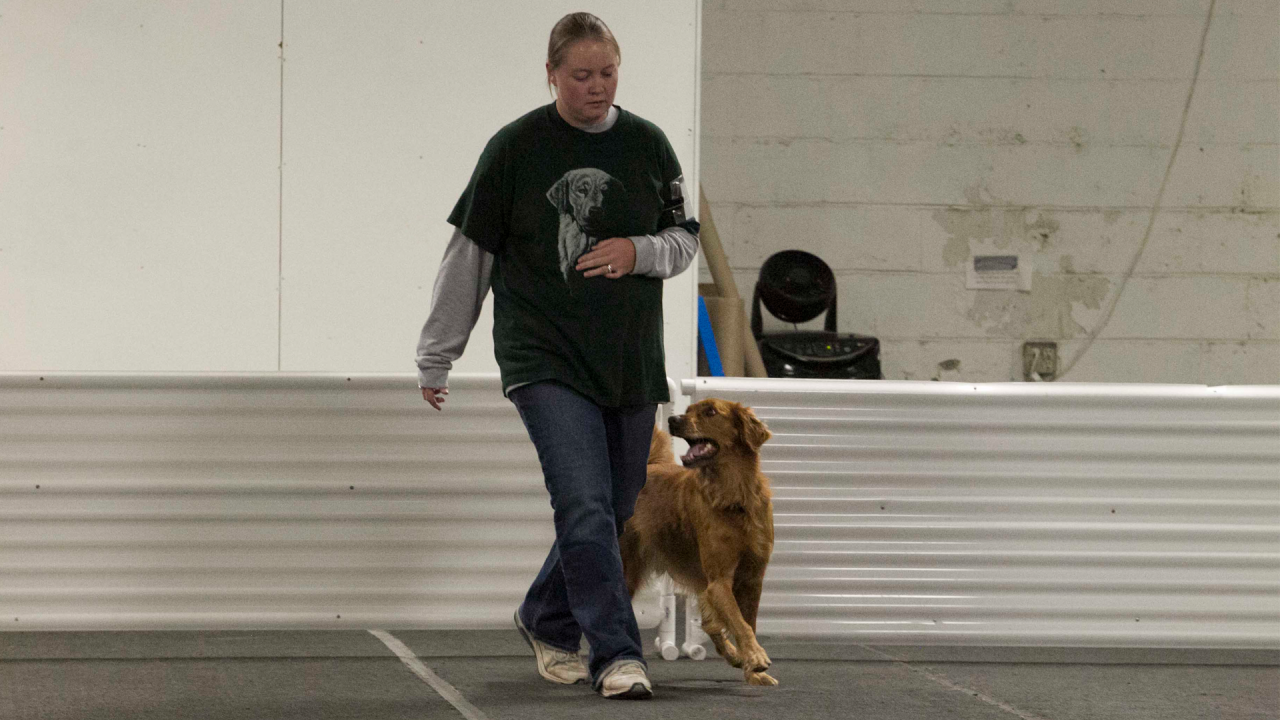
In rally obedience, the "around" behavior is one of the most frequently used skills, second only to heeling. It is most commonly seen in the right finish, but many other signs also incorporate the dog circling the handler. Teaching around as a solid behavior will be a valuable investment as you and your dog progress through the rally levels.
When competing in higher-level events, having a speedy and reliable around behavior is crucial. Dogs that circle their handlers slowly lose precious time on this one move. By incorporating games and exercises that focus on speeding up your dog's around, you can enhance their performance in the ring.
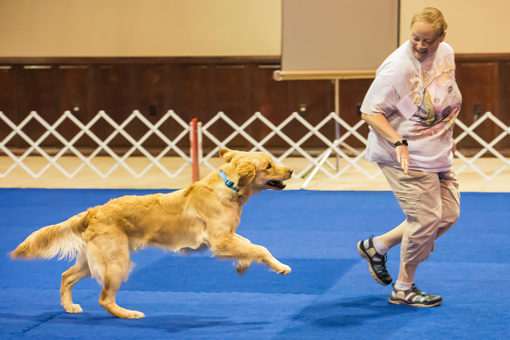
Often times, the hardest step in heeling is that first one. There are so many fun ways to start moving forward! Stop heeling from a boring sit and start motivating your dog!

My ultimate goal when trialing is to have the same dog in the ring that I have in training. A dog that is happy and joyful and having a blast.
I think we all want that. And we train really, really hard for a very, very long time to get that.
And then we compete and don't get it. And we are very disappointed and frustrated. And to be honest, a little confused. I mean, what the heck happened?? We worked soooo hard!! We made everything sooo much fun!! And when we train at home, the dog is sooo happy!! We start to question whether our dog is cut out for this. Whether the dog can handle the "stress" of the ring. Maybe this just isn't our sport.
Training in small spaces is an incredibly valuable training tool and my dogs think it's a blast! Having trouble with an exercise? Have a piece(s) that could use more confidence or animation? Have behaviors that require precision, but you don't want to lose enthusiasm? I'll show you how to turn them into behaviors your dog loves and finds self-reinforcing. Small spaces are perfect for building engagement, working with reinforcers off your body, laying the foundation for distraction work, strengthening ring entrances, transitions, and more! Time for a change of scenery. Join me to learn how to optimize training in small spaces.

Position changes are a skill needed in both rally and obedience. Taking the time to teach a good foundation will make the more advanced position changes much easier. In this blog, I'm working with Excel, who wasn't quite two when I videoed these sessions.
Excel is a dog who finds movement very reinforcing, and therefore, stillness is difficult. For this reason, I spend a lot of time reinforcing him for doing nothing. This helps with anticipation and also helps him keep his body quiet and still. If your dog is like Excel, reinforce for waiting for the next cue and stillness even more than you reward the movement behaviors.

Teaching your dog advanced commands can be a rewarding experience, and one valuable skill for rally is lateral movement in front of you. This blog post will explore a training approach involving mats or props to guide your dog through this challenging but achievable behavior.

Rally is a fun and captivating dog sport that requires not only obedience skills but also excellent memory recall abilities. Not only do you as a handler need to remember how to properly execute the signs, but remembering the rally course is essential for seamless performance and achieving top scores. In this blog post, we will explore practical strategies to help you improve your memory and successfully remember rally courses. Let's dive in and unleash your memory power!

Mastering side steps in rally can be a source of immense joy for both the participant and the audience. While teaching a proficient side step may pose some challenges, the effort invested is worthwhile.

Is precision important to you in rally or obedience? It's true, most of us would like our dogs to be precise and accurate! Sometimes, however, the way we go about achieving that goal of precise behaviors can affect the dog's attitude. So how can we get both precise behaviors and happy dogs?

Location specific reinforcement cues are extremely helpful for improving position while heeling. Because where you deliver the treats affects where the dog wants to be, you can use that to your advantage for whatever tendencies your dog might have.
Reinforcement cues tell the dog that he or she is right. Location-specific reinforcement cues take that a step farther by delivering the reward in a specific way or area, therefore affecting how the dog might perform the behavior in future repetitions. Because dogs are very efficient creatures, they will quickly figure out how to most effectively get the treat. Therefore, they tend to gravitate towards where the treat comes from. If we can be strategic about reward placement, we can affect the tendencies of the dog over time.
Let's look at some common location-specific reward markers in heeling.

You're in the middle of a rally run, and something goes wrong. Your dog makes an unexpected mistake, and you're left frantically wondering what to do! Making those split decisions in the moment can be hard, but those decisions can make the difference between a qualifying and non-qualifying run! Let's talk about the best way to handle some of the more common mistakes that happen in the rally ring!

Why would you want to use props to teach front? Because, used PROPerly, they can make your life a lot easier! Keep reading to find out why I love using props to teach fronts!
In my opinion, it's easier to fade a prop than it is to fade extraneous body movements and cues. Trying to show your dog where "front" is with treats and your hands isn't easy!

Have you heard of the 3 D's of dog training? It's a pretty popular term that many trainers use. The 3 D's refer to Distraction, Duration, and Distance. These are one way to categorize the difficulties or challenges in dog training.
Distraction refers to both the environment and things in the environment that are distracting. Generalization (moving to a new environment to help your dog learn the behavior more thoroughly in all settings) is a form of distraction.
Duration is how long the dog is performing the behavior. It can also refer to the number of reps of a behavior, or even how many behaviors are chained together at one time.
Distance can mean a couple of different things. Distance between the dog and the handler is one part. The other is distance from a distraction(s). The farther the dog is away from a distraction, the easier it will be for the dog to perform behaviors.
If you think of Distraction, Duration, and Distance as challenges, it's easy to remember that you should only increase one at a time. However in practice, people often try to increase the challenges too quickly, or increase two or even all of them at the same time. In order for your dog to be successful, you want to be sure that two out of three are as close to baseline as possible.
Services we provide

Structured programs with step-by-step guidance to build strong skills.
50 000+
Happy customers
Why choose us?
We offer a variety of online training solutions designed to help you and your furry friend achieve success