Behavior Science (33)
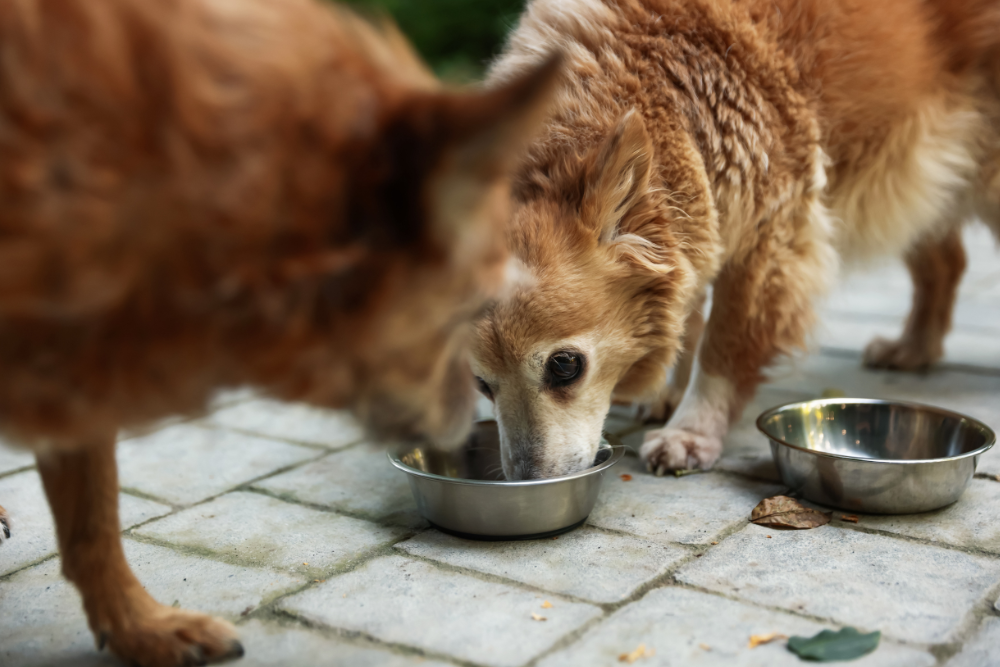



Canine frustration and FOMO are often misunderstood as attention-seeking behavior or "poor impulse control." Dogs bark, whine, pace, or struggle to wait their turn, and they're quickly labeled as impatient, dramatic, or just trying to get what they want. A common response is to ignore the behavior and hope it fades over time.
But what's often missed is that FOMO isn't just a behavior problem. It's an emotional experience. And when frustration is frequent, intense, or happens day after day, it can affect more than what you see on the outside. It can influence a dog's overall well-being, their ability to learn, and their quality of life.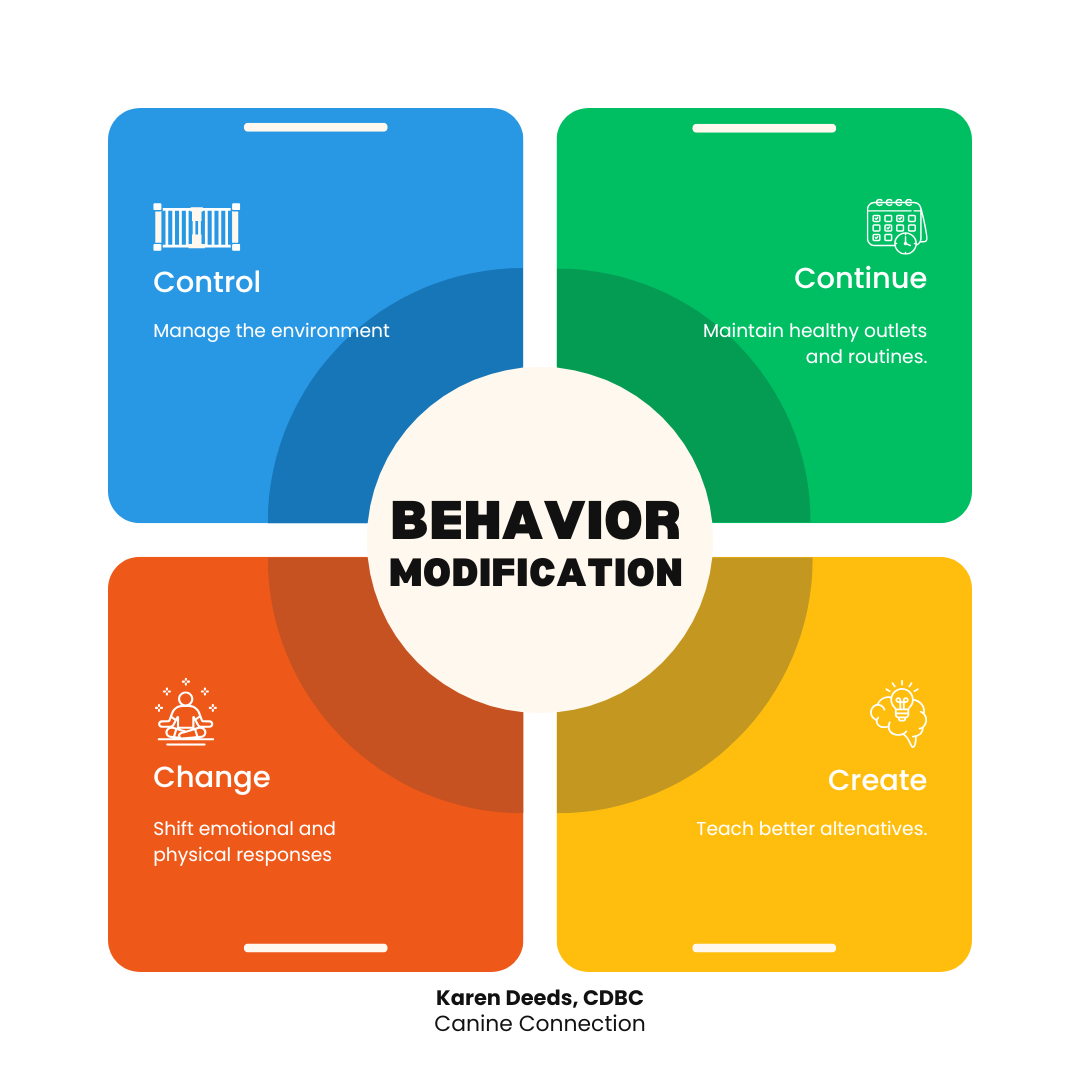
As a behavior consultant working in sport, working-dog, and pet-dog environments, one theme remains consistent: we want to set our dogs up for success. Whether we're training for obedience, rally, agility, disc, detection work, or tackling big behavior concerns, positive-reinforcement trainers break training into small, achievable steps. By minimizing mistakes, we reduce stress and build confidence.
To make this simple for dog guardians, I often rely on a simple framework I call the Four C's of Behavior Modification: Control, Continue, Change, and Create.
1. Control: Manage the Environment
The first step in any behavior case, is to control the environment – blocking opportunities for the dog to rehearse the behavior we're trying to fix. This isn't about restricting your dog's life. It's about replacing tough situations with ones that support progress Without this, dogs keep landing in the scenarios where 'bad' choices are inevitable…and frustrated humans may assume the dog 'knows better.' Think of it like this: an alcoholic living in a bar won't stop drinking. They need distance from the trigger while learning new skills and stabilizing their emotions. Our dogs deserve the same courtesy – we must keep them 'out of the bar.'
If we skip this step, the dog is frequently put into situations where poor choices are likely. When this happens, guardians may assume the dog "knows better" and resort to punishment. But as the saying goes, an alcoholic living in a bar will struggle to avoid drinking. Until they learn new skills and their body adapts, staying out of the tempting environment is essential. Our dogs need the same courtesy—we must keep them "out of the bar."
Examples of effective management include:
- Feed resource guarding dogs in separate rooms.
- Remove high-value items such as bones or chews unless dogs are separated.
- Block windows or change rooms to prevent reactivity and window barking.
on its own.
2. Continue: Maintain Healthy Outlets and Routines
Management doesn't work alone. We must continue meeting the dog's physical and emotional needs. Sniff walks, enrichment, fitness work, structured play, and predictable daily routines all help lower stress and anxiety. A stable emotional state makes learning easier and behavior change faster.
3. Change: Shift Emotional and Physical Responses
- Desensitization - gradually exposing the dog to the trigger at a tolerable level
- Counter-conditioning - pairing the trigger with something positive to eliminate fear or anxiety
- Differential reinforcement - teaching and rewarding alternative responses to reduce frustration, conflict or behavior not rooted in fear
When the emotions shift, the behavior shifts. We're transforming the dogs internal state, not just the outer actions.
4. Create: Teach Better Alternatives
Finally, we must create appropriate behaviors to replace the unwanted ones. Ask yourself: What do I want my dog to do instead? If we don't teach this clearly, the dog is left guessing.
Replacement behaviors might include moving away, checking in with the handler, settling on a mat, targeting a hand or object. These give your dog a dependable script when life gets tough..
The Four C's in Summary
- Control the situation to prevent further rehearsal of unwanted behavior.
- Continue routines and activities that support emotional and physical well-being.
- Change the dog's emotional response through systematic behavior work.
- Create new, appropriate behaviors to replace old habits.
Together, these four steps build a humane, effective, and sustainable path to real behavior change – one thoughtful step at a time.

On Tuesday, January 7, 2025, a brush fire – dubbed the Palisades Fire since it started along Palisades Drive – broke out in the Pacific Palisades neighborhood of Los Angeles, just a few miles from my home. This wasn't a unique occurrence; brush fires happen around Los Angeles every year, and there have been small fires in Pacific Palisades before. But conditions conspired to grow the Palisades Fire in a way I've never seen in the nearly 25 years I have lived in the area.
Within a few hours, another fire, dubbed the Eaton Fire, had erupted in the Altadena area. Now two communities on opposite sides of the city were threatened. Worse yet, unusually strong Santa Ana winds that were gusting at up to 80 mph (roughly 130 kph) made fighting the fires basically impossible.

The core of the Control Unleashed program is the use of patterns to help our dogs feel more comfortable in our crazy world. Patterns allow a dog to use voluntary behaviors to initiate a simple, repetitive chain that creates a predictable pattern. This will help to normalize the environment and allow the dog to process information from the safety of the pattern.

The dreaded mistake
You're at an agility trial with your dog. You point to the tunnel, but they go over the jump next to it instead. You're pretty sure you called out the right word, and that your body language was solid, but your dog went to the wrong obstacle anyway.
So what do you do? You go back to the club. You practice a lot with jumps and tunnels next to each other. You drill yourself to ensure you say the right word and move the right way. And everything goes GREAT… until your next trial. This time, your dog goes over the A-frame instead of through the weave poles. Different specifics, but you're off course again.

Serious behavior problems are not the norm in the competitive sports world, but they do happen. Training can certainly affect behavior, and behavior can influence training! They are not the same!
Most behavior problems have underlying 'emotional' issues and training alone isn't the answer. If your dog is barking at someone, which is commonly a 'distance increasing' behavior that comes from the place of fear, we need to acknowledge that emotion, not suppress it. We can certainly use positively trained skills like obedience to replace an undesired behavior, but it needs to come from a place of confidence and choice, not force or coercion.


Note: the author of this summary is second author on the paper
This paper describes multiple studies, which assess the effects of genetics and breed on canine behavioral traits; assess the difficulty of visual interpretation of mutt breed ancestry, and the morphological traits people use to guess breed ancestry; and find new genomic regions associated with behavioral traits in dogs.
As is typical of papers published in the prestigious journal Science, this paper contains several related studies that inform each other.
The researchers collected and analyzed:
- 16,000+ owner surveys on their dogs' physical and behavioral traits, through the website darwinsark.org
- 2000+ genetic sequences of dogs with surveys (a subset of the first, larger set of dogs)
- Guesses from the public via the website muttmix.org about the top three breeds in a set of 31 highly mixed mutts, based on images, video, and short descriptions of the dogs


Clarity is critical for any learner. Whether we use an errorless learning approach, or we use a method of training that incorporates highlighting errors to our dog, it is still essential that we maximize the likelihood of success through careful set ups. It is also necessary to always be prepared to rapidly change strategies, as soon as we notice our dog is not becoming more confident, and more successful, throughout our training sessions.
Before we dive into the specific issues that can occur in our attempts to create successful and confident complex behavior chains, let's look at the broader area of managing errors.


On Feb. 11th, 2022, the first day of The Lemonade Conference, our free lunch panel was on Mental Health for the Reactive Dog. Melissa Breau was joined by Amy Cook, PhD; Sarah Stremming; and Sophie Liu, DVM. The recording from the live stream is available below.


This is something that many people new to positive reinforcement (R+) training struggle with: Why can 'fixing' behavior problems (or any training problem) seem so much harder using
positive techniques than using punishment or force? I mean, you're rewarding the hell out of the behaviors you want so why are things still turning to custard?
Because using positive reinforcement to change established behavior requires that we become PRO-active rather than RE-active trainers – and that is the challenging bit.


Stress resilience is the ability to effectively respond to stress. In humans, higher levels of stress resilience are associated with decreased susceptibility to mental health disorders. Poor stress resilience is associated with mental and physical health concerns and decreased quality of life.
Basically, stress resilience is key to living a good life.
Dogs that have better stress resilience will be happier - and therefore less likely to develop behavior issues. This is all well and good, but is this something we actually have the ability to change? As more and more research comes out on this topic, the answer is increasingly becoming "yes"!

We talk about enrichment in the dog world all the time. How important is it, really? It turns out that it's very important! In fact, the very definition of enrichment states that it improves animal welfare and wellbeing. Today I am going to focus on the topic of cognitive enrichment, which Clark defines as "an appropriate cognitive challenge results in measurable beneficial changes to well-being" (Clark, 2011).

We put a lot of sweat and tears (hopefully no blood!) into training our dogs. So, we want to make sure they retain as much learning as possible between sessions.
Both sleep and positive emotional states have been shown to enhance mental performance and memory in dogs when they occur immediately after learning a new task. Research also shows that emotional arousal can enhance memory.
We often think of this occurring in conjunction with negative events—such as September 11th. But can it happen with strong positive emotions as well?

The emotion of fear, and the associated fear response, are both completely normal components of any healthy animal. All dogs will show a fear response at some point in their life. It is particularly common to see fear responses in puppies and young dogs, as they learn about novel objects and situations.
A true fear response is a response focused on one or more specific and present stimuli.

The sporting dog group encompasses many beloved breeds, including some of the most popular. Whether you already own one of these wonderful dogs, or are considering a breed from this group, it's important to understand what these dogs were bred for so you know what to expect.

So, last week in Part 1, we discussed all the situations where we may consider limiting our dog's choices. Now let us look at some situations where increasing choice (or even offering unlimited choice) may be useful.
Offering choice and control remains a cornerstone of animal welfare. However, it is a harsh reality that many of our dogs have little control over their own lives.
Like all captive animals, we mostly control what they eat, when they eat and how much they eat; they are mostly confined to a space that we dictate (our home, fenced yard, etc.); we control when they get to leave our property and for how long; and we mostly control where they go and what they do. In many homes they also have limited choice as to whether they are inside or outside; where they rest / sleep; and many even have no independent choice of when they toilet. These are adult creatures, independently capable of many tasks, with amazing cognitive skills, and we control their lives far more than even a captive zoo animal (who at least can toilet at any time and is only very rarely confined to a crate).
Much of this control is necessary for dogs to be safe and healthy, and for them to exist successfully within our society and especially within our homes. Fortunately for the most part dogs are amazingly adaptive and enjoy the life they are given. However sometimes it is worth objectively considering just how "unnatural" their lives are, and how little true control they really have.

For many years we have understood that choice and control are imperative to the welfare of all living organisms. However, once this phenomenon was discovered, it was assumed that if choice is good, then more choice would be even better!
Many human studies have proven this to be incorrect. Indeed, too much choice may lead to ambivalence, frustration, confusion, anxiety, stress, drained psychological energy and reduction in self-regulation. Although this seems counter-intuitive, the phenomenon can be observed in even the most basic of marketing experiments.
When researchers open a mini-shop offering over 20 flavors of a particular product, and then close and re-open offering less than 10 flavors, the shop with less choice will sell far more product overall. Having greater choice, does not result in improved decision making; rather, reducing choice can be seen to facilitate the process of decision making and, in many studies, has been linked to a reduction in associated stress.
Some of the reasons for this are quite specific to humans, as we are able to feel ongoing regret for a perceived poor choice, and we have the capacity to continue to compare our selection to all of the choices we didn't select.
However, there are also some underlying principles that can easily be applied to our dogs. If we offer only a very limited number of choices in a given circumstance, then the decision process is less difficult, is likely to be made more quickly, with less frustration and/or ambivalence, and the "right" outcome is far more likely to be selected. We know this. We implement this in many of our training strategies. We set the dogs up for success. We limit the other options available (e.g., the item we want the dog to interact with is the only item in the training environment initially). Then of course in conjunction with this strategy we heavily reinforce the behavior we desire.


Is there anything that you do or carry with you when you want good things to happen? A number of celebrities do. According to InTouch Weekly, actress Jennifer Anniston always enters a plane with her right foot first, and after tapping the outside of the plane. Singer Taylor Swift has a strong belief in the power of 13. She paints it on her hand before every show because, "13 is my lucky number; for a lot of reasons," she explained in an article to MTV in May 2009.
"It's really weird … I was born on the 13th," she continued. "I turned 13 on Friday the 13th. My first album went gold in 13 weeks. My first #1 song had a 13-second intro. Every time I've won an award I've been seated in either the 13th seat, the 13th row, the 13th section or row M, which is the 13th letter … Basically, whenever a 13 comes up in my life, it's a good thing."
Services we provide

Structured programs with step-by-step guidance to build strong skills.
50 000+
Happy customers
Why choose us?
We offer a variety of online training solutions designed to help you and your furry friend achieve success