AG330 Agility Drills for Better Timing

This class will focus on that ever illusive TIMING that everyone talks about. What does your instructor mean when they say "You are LATE...AGAIN"?
Course Details
This class will focus on that ever illusive TIMING that everyone talks about. What does your instructor mean when they say "You are LATE...AGAIN"?
When exactly does YOUR dog need the info to turn, to go straight, to go into handler focus or obstacle focus?
Exactly what the heck do people mean when they talk about looking at the line?
How do you stay connected?
We will utilize coursework to help you develop your timing. There will be beginner and advanced courses offered for you to work on your timing!
Teaching Approach
Lectures are released in one batch on the first day of each week. They are a combination if written lectures ((bullet points/steps) and video demonstrations.
As you are working through these drills, you will be required to step towards obstacles and move away from obstacles. The ability to throw rewards if needed is also an advantage. While the lectures assume an able-bodied handler and a dog who is interested in food or toys, Loretta is highly flexible for students at the Gold Level and will also try to accomodate as much as possible for Silver. Loretta is happy to make adjustments based on the team's needs. Please ask for modifications if needed.
Feedback is provided using a timestamp, and description of what is being talked about in the video submission. An example of this is below:
0:35 when you stepped forwad with your right foot, your foot was not pointing to the jump, but it was turned 90 degrees. That is why your dog did not send to the jump. Please rotate your foot clockwise (to the right) approx 6 inches so it is facing the jump bar.
0:55 here you did a LOVELY job mvoing off that forward send. That is just how I want it to look! WELL DONE!
This class will have a Teacher's Assistant (TA) available in the Facebook study group to help the Bronze and Silver students! Directions for joining that Facebook group will be in the classroom after you register.
Syllabus
Week 1:
- What exactly does your instructor mean when they tell you "YOU ARE LATE AGAIN"?
- Do you have the commitment needed to have good timing?
- Why is good timing important
- Homework 1: PERFECTION
- Homework 2: Methodical Handling Drills
Week 2:
- Focusing on Front Crosses
- Front Cross timing
- What does the dog need to know before take off?
- Homework 1: PERFECTING the Front Cross Timing
- Homework 2: Drills for Front Crosses
Week 3:
- Focusing on Rear Crosses
- How motion changes rear crosses
- How to have control on all your rear crosses
- Homework 1: Perfectiong the Rear Cross Timing
- Homework 2: Drills for Rear Crosses
Week 4:
- Focusing on Blind Crosses:
- What do they cue. Finding your dogs blind cross abilities
- When to blind?
- Homework 1: Perfecting the Blind Cross Timing
- Homework 2: Drills for Blind Crosses
Week 5:
- Focusing on sends
- What all is is involved with a send?
- How to take full advantage of a send!
- Homework 1: Perfecting the sends
- Homework 2: Drills for Sends
Week 6:
- Putting it all together!
- How do you maintain your methodical handling?
- Building up mental stamina
- Homework 1: Perfecting differences
- Homework 2: Drills to help you put it all together!
Prerequisites & Supplies
Sample Lecture
The Anatomy of a Turn.
When you go to agility classes, or seminars, you will always hear people talking about TIMING. This is a word that comes up in all levels of agility; from novice through World Team competitions. The ELUSIVE TIMING :)
I have found that, telling a student they are LATE...can help them, but I like to pin point JUST what is late. Which is why I came up with the following diagrams to describe the cues for Extension and Collection.
Let's start with EXTENSION. Extension is the dog not having to make a turn. This can be different for big versus little dogs so I have included both in diagrams.
Below is a diagram of typical extension for a BIG DOG. Imagine you are looking at two jumps from the side (so the vertical black lines are the two jumps.
The RED LINE is the dogs stride.
- SO the dog takes jump 1 (first jump on the left) and then lands off 1.
- Takes one stride between 1 and 2 (the jump on the right).
- Then takes off for jump 2, which is the 3rd red line.
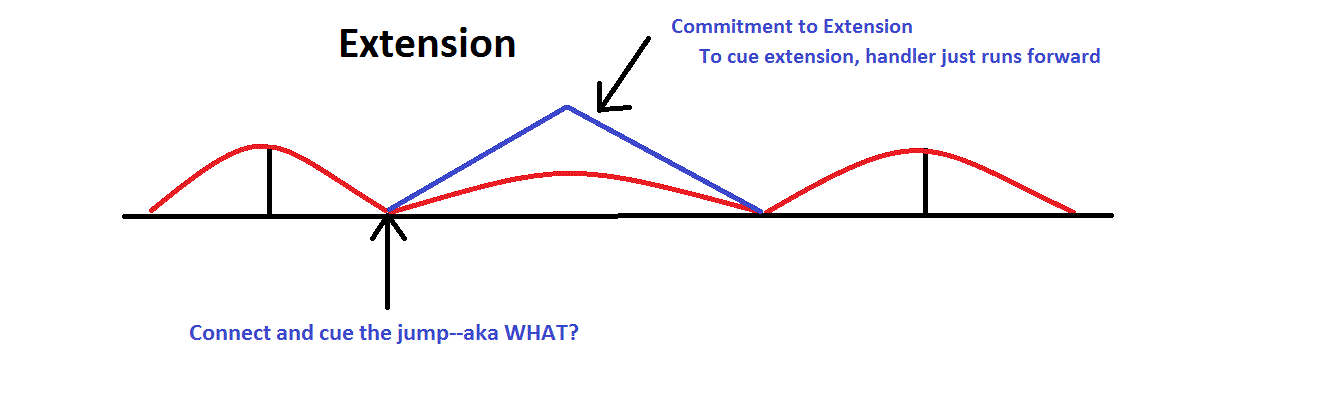
As we discussed last week, the first arrow you will see is the moment that you should CONNECT:
- When the dogs feet HIT the ground off of jump 1, you then cue the WHAT (aka the next jump).
- Which for extension is: running forward, saying the obstacle name, indirect eye contact (peripheral vision).
- This tells the dog HOW to take the jump, aka in extension.
The 2nd arrow is pointing to the BLUE line---this shows you the dogs stride after landing off of 1.
- Once you have cued the 2nd jump, you are now in the dogs "Commitment to Extension" aka they are committed to jump 2 and they are going to jump big and flat.
- You are only handling to the "Commitment for Extension" you are then done handling the jump.
Now let's look at the small dogs diagram for Extension:
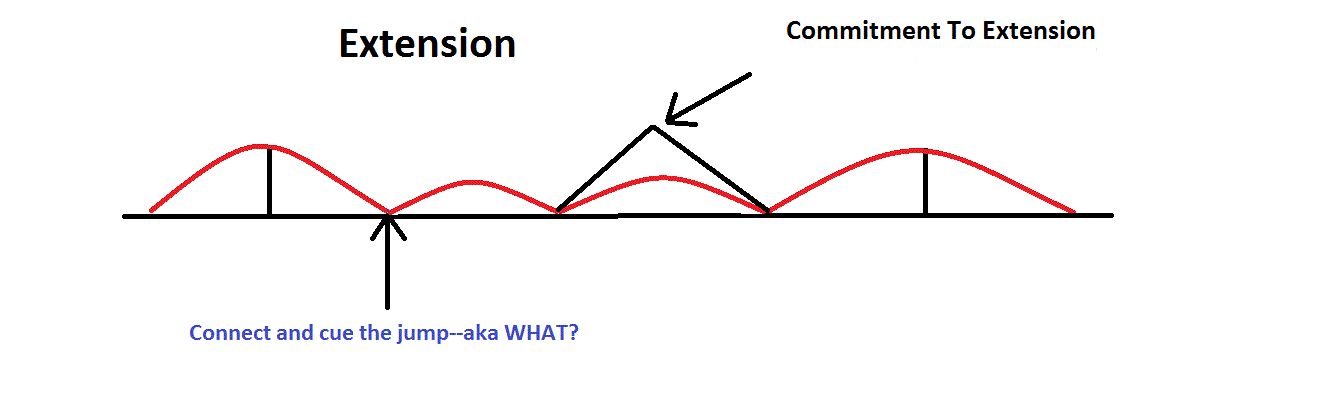
If you compare the big dog diagram, with the one above, you will see the differences for the smaller dog.
- First arrow is still that connection point as the dogs feet land off the first jump. Then you will cue the 2nd jump, aka the WHAT.
- With a smaller dog, you will have 2-3 strides (I am just showing two here).
The 2nd arrow is showing the stride before take off that is the dogs "Commitment to Extension".
- So the dog is committed to the jump, and will take the jump in an extended state, so big and flat jumping.
- Again you are only handling until the "Commitment to Extension", then you move onto the next obstacle.
MOST of us are pretty good at this, just run forward and point at things :) It is when we look at TURNS that things get a bit tricky.
Collection with a BIG dog:
The RED LINE is the dogs stride over jump 1, and then that middle stride.
- SO the dog takes jump 1 (first jump on the left) and then lands off 1.
- Takes one stride between 1 and 2 (the jump on the right).
- The first arrow is the same, that moment that you should see those feet hit the groun, and you will cue the jump. Aka the WHAT?
The GREEN LINE is the dogs collection stride, so in order to collect (aka turn) the dog must add a stride in, and THEN take off for the jump.
- In order to do this, YOU MUST show collection during the MIDDLE STRIDE...IF you do not, the dog will just extend as shown in the above diagrams.
- Decel commands: slowing down, a send, turning into the dog (aka like a Front cross), calling the dogs name, Direct eye contact. This tells the dog HOW to take the jump, in this case with collection so they can turn.
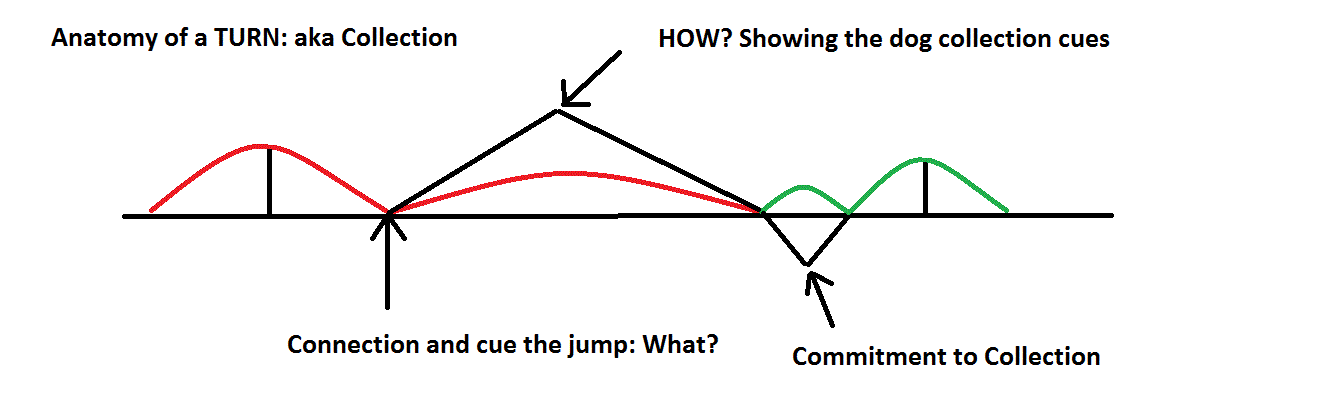
IF you get the cues for collection out DURING THAT MIDDLE STRIDE, you will then cue a turn.
- As the dog is reaching the area I have labeled the "Commitment to Collection" the dog knows to take the jump, and YOU ARE DONE. You can move through your front cross, rear cross, or other handling, and to the next obstacle.
Let's compare that to the small dog diagram:
The RED LINE is the dogs stride over jump 1, and then that middle stride.
- SO the dog takes jump 1 (first jump on the left) and then lands off 1.
- Takes 2-3 strides between 1 and 2 (the jump on the right).
- The first arrow is the same, that moment that you should see those feet hit the groun, and you will cue the jump. Aka the WHAT?
The GREEN LINE is the dogs collection stride, so in order to collect (aka turn) the dog must add a stride in, and THEN take off for the jump.
- In order to do this, YOU MUST show collection during the second STRIDE...IF you do not, the dog will just extend as shown in the above diagrams.
- Decel commands: slowing down, a send, turning into the dog (aka like a Front cross), calling the dogs name, Direct eye contact. This tells the dog HOW to take the jump, in this case with collection so they can turn.
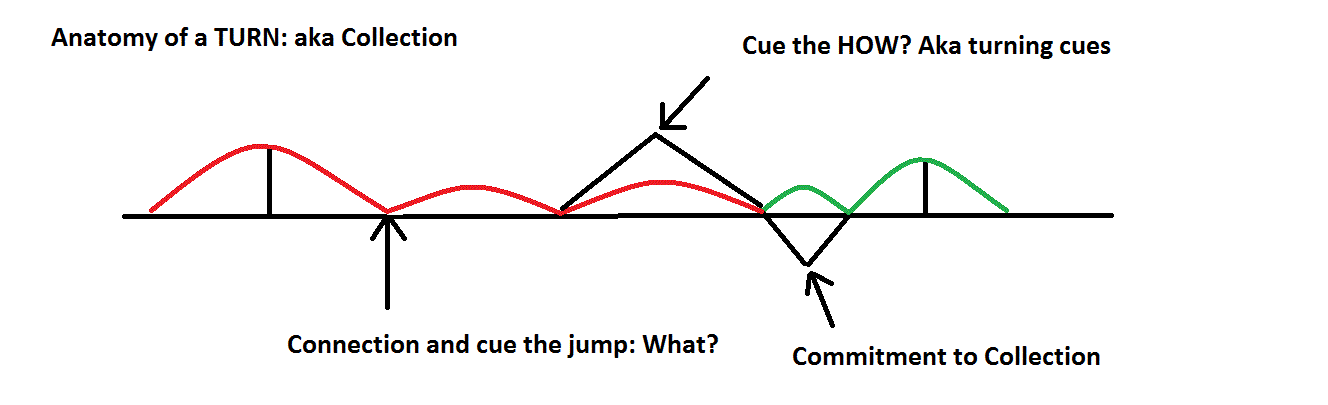
IF you get the cues for collection out DURING THAT SECOND STRIDE, you will then cue a turn.
- As the dog is reaching the area I have labeled the "Commitment to Collection" the dog knows to take the jump, and YOU ARE DONE. You can move through your front cross, rear cross, or other handling, and to the next obstacle.
So... you cue the WHAT (aka the jump), then the HOW (aka extension or collection) then you GO (aka leave the jump and move onto the next obstacle while still staying connected).
Example. If, you cue the HOW, but not the WHAT, the result is??
- A refusal, the dog only sees you cuing them to turn into you, they never saw the 2nd jump.
If you cue the WHAT, but not the HOW, the result is??
- Extension, the dog will just run forward as there are not any turning cues from you.
If you cue the WHAT, and the HOW, but you do not GO, the result is??
- You stay behind, you get behind, and you are on the dogs path.
I hope this explains extension and collection (a turn) in a more detailed manner. This is why I do not just say someone is late. There are many ways to be late, you can be late giving the cue to the next obstacle (the what) you can be late cuing HOW (aka in extension or collection) or you can be late moving onto the next obstacle. I like to pinpoint exactly what part of the information was missing for the dog.
Instructors
Loretta Mueller (she/her) has been involved in agility since 2003 with her first rescue dog, Ace. Since then she has been involved in a variety of dog training activities including USBCHA herding, competitive obedience, rally obedience, and service dog training. In 2007, Loretta...
Registration
Gold
$260
Enrollment limit: 12
- Access to all lectures and homework forums discussion
- Read all posted questions and answers
- Watch all posted videos
- Post general questions to discussion forum
- Submit written assignments
- Post dog specific questions
- Post videos (unlimited)
- Receive instructor feedback
Registration dates:
May 22, 2026 - June 15, 2026
Silver
$130
Enrollment limit: 25
- Access to all lectures and homework forums discussion
- Read all posted questions and answers
- Watch all posted videos
- Post general questions to discussion forum
- Post dog specific questions (video only)
- Post videos (up to 2)
- Receive instructor feedback
Registration dates:
May 22, 2026 - June 15, 2026
Bronze
$65
Enrollment limit: Unlimited
- Access to all lectures and homework forums discussion
- Read all posted questions and answers
- Watch all posted videos
Registration dates:
May 22, 2026 - June 15, 2026
Why choose us?
We offer a variety of online training solutions designed to help you and your furry friend achieve success

FAQ
Explore the questions we get asked most often and find out everything you need for a smooth experience with us.
Start by clicking on the Course Schedule link at the top of this page. If registration is open, select the course you wish to take from the list and click on that link. From that page, click on the registration link and choose the enrollment level you are interested in. This webpage describes the steps in more detail.
Registration opens on the 22nd of the month preceding the course start date (ie March 22 for courses beginning April 1st) and close on the 15th day of the month the session has started (ie April 15 for courses starting April 1st). You cannot register for 6 week courses outside of this period.
Scholarships are offered to students who do not feel they can afford the full tuition, but who have a sincere interest in expanding their skills as a dog sport trainer. Scholarships are offered in the form of a 50% tuition credit at the Bronze level. To apply, select the Scholarships link from the top menu (under new students) or click this link. We ask that if you are on a scholarship, you limit yourself to one class. There are a maximum of three scholarships per student permitted in a calendar year.
Our testimonials
Don't just take our word for it — see what our clients say about their experience working with us.